
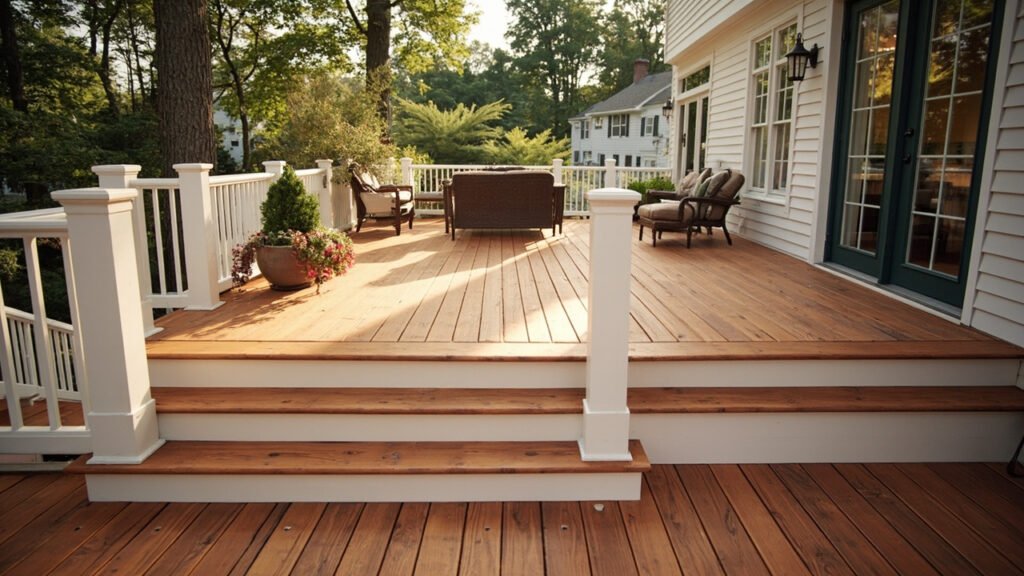
Building a deck in the Boston area is one of the most rewarding home improvement projects you can tackle. Whether you are envisioning a spacious cedar deck for summer cookouts in Newton or a cozy front porch addition in Brookline, understanding the basics of deck construction helps you make informed decisions and communicate effectively with your contractor. Advanced Deck & Porch has been helping homeowners throughout Greater Boston, MetroWest, and surrounding towns build safe, beautiful outdoor spaces for years. Here is what you should know before you begin.
Boston Weather and Your Deck Design
New England weather is tough on outdoor structures. Boston experiences cold, snowy winters with significant freeze-thaw cycles, humid summers, and plenty of rain throughout the year. All of this means your deck faces real challenges that deck builders in milder climates simply do not have to consider. Proper weather exposure planning starts from the very first design decision.
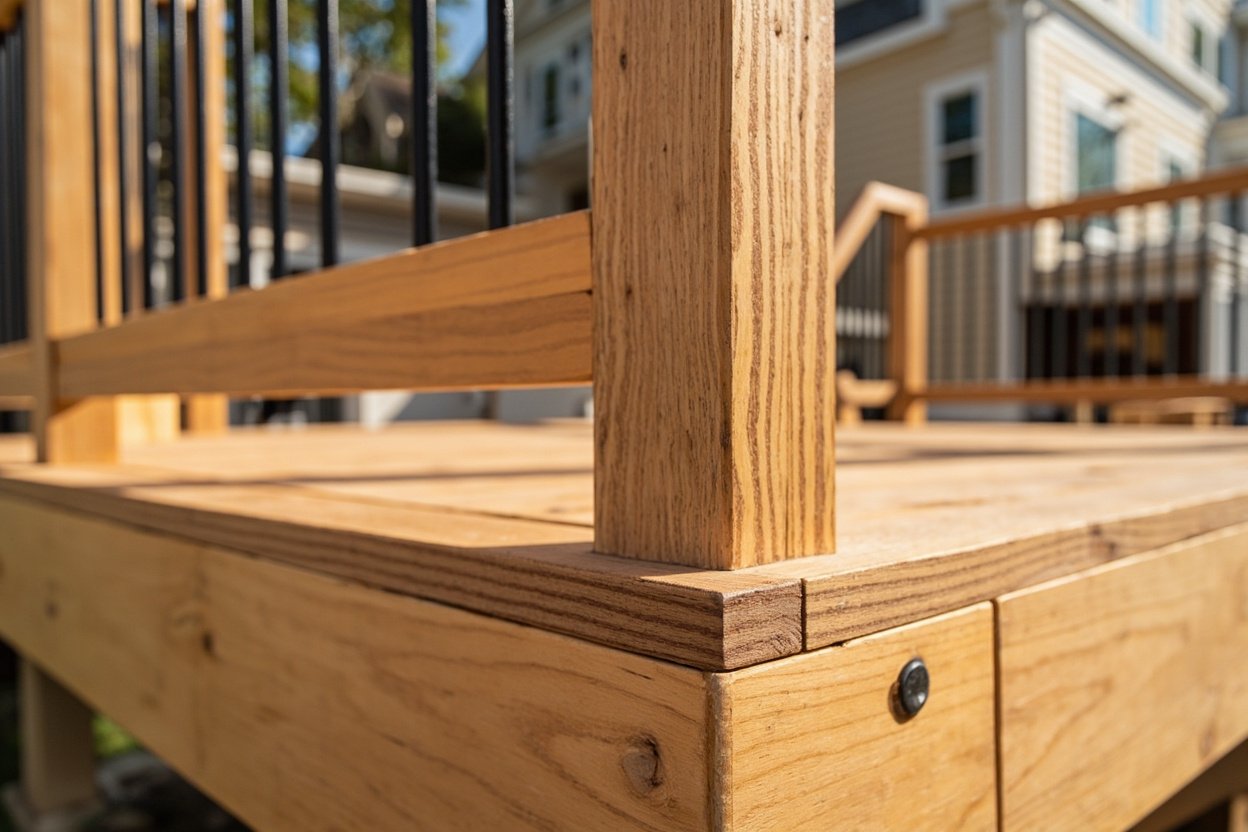
Snow loads are a genuine concern for structural framing in communities like Wellesley, Weston, and Lexington. Your deck must be designed to handle the weight of accumulated snow without stress or damage. This affects everything from joist spacing to beam sizing and footing depth. A well-built deck in this region should last decades, but a deck built without these factors in mind can develop problems within just a few seasons.
Moisture management is equally important. Humidity and rainfall cause wood to absorb water, leading to warping, rot, and mold over time if the wrong materials are used or if proper ventilation is not designed into the structure. This is why thoughtful material selection and maintenance planning matter so much for homeowners in Quincy, Braintree, and surrounding towns.
Choosing the Right Deck Materials
When it comes to deck materials, Boston area homeowners have several solid options, each with distinct advantages. Traditional pressure-treated lumber remains popular because it is affordable and resistant to insects and decay. Properly maintained pressure-treated decks serve families well for many years.
Natural cedar and redwood offer beautiful grain patterns and natural resistance to decay, though they require regular sealing and staining to maintain their appearance in our climate. Many homeowners in Wayland, Natick, and Acton appreciate the warm, classic look of cedar for railing components and deck surfaces.
Composite decking has become increasingly popular for good reason. Made from a blend of recycled wood fibers and plastic, composite boards resist fading, staining, and scratching. They do not require sealing and stand up exceptionally well to weather exposure. For busy homeowners in Westwood, Canton, and Norwood who want a beautiful deck without extensive seasonal maintenance, composite decking is often the smart choice. Modern composite products come in a wide range of colors and textures that mimic natural wood beautifully.
Your choice depends on your budget, aesthetic preferences, and how much maintenance you are willing to perform over the years. A reputable contractor walks you through these tradeoffs based on your specific situation and the unique conditions of your property.
Structural Framing: Building a Safe Foundation
The structural framing is the backbone of your deck, and it is where cutting corners causes the most serious problems. Proper framing starts with appropriately sized footings that extend below the frost line. In the Greater Boston area, frost depths can reach 36 to 48 inches depending on your exact location. Footings that do not extend below this line heave during winter freeze-thaw cycles, potentially damaging your entire structure.
From there, your deck requires properly sized joists and beams based on your deck dimensions and expected loads. Stairs must be built to code with consistent riser heights and adequate tread depth. This is not an area where approximations work. Your contractor should follow span tables and building codes carefully to ensure your deck stairs are safe and comfortable to use.
Connecting hardware matters too. Metal brackets, joist hangers, and ledger connections must be rated for exterior use and installed correctly. In coastal-adjacent communities like Weymouth, Milton, and Quincy, using galvanized or stainless steel hardware helps prevent premature corrosion from salt air exposure.
Railing Safety and Local Building Codes
Railing safety is not optional. Building codes throughout Massachusetts require decks higher than 30 inches above grade to have sturdy railings. These railings must meet specific height requirements, typically 36 inches for residential applications, and must not allow a 4-inch sphere to pass through any opening. This prevents children from getting stuck or falling through gaps.
Boston-area municipalities enforce these codes rigorously. Communities like Bedford, Burlington, and Billerica require permits for deck construction, and your project will be inspected at multiple stages including footing placement, framing completion, and final construction. Working with an experienced contractor who understands local requirements helps your project proceed smoothly without costly delays or corrections.
Railing options range from traditional wood balusters to aluminum, vinyl, and composite rail systems. Glass panel railings offer unobstructed views, which many homeowners in Wellesley and Weston appreciate. Your contractor helps you select a railing system that meets code requirements while complementing your home architecture and personal style.
Ready to discuss your project? Visit our deck and porch services page or call (857) 837-2100 to schedule a free onsite estimate.
Planning Your Deck Project in Greater Boston
Successful deck construction requires thoughtful planning that begins well before groundbreaking. Consider how you intend to use your deck. Do you want space for outdoor dining and cooking? A lounging area for reading and relaxing? Room for hot tub installation? These questions shape deck size, layout, and design features.
Think about sun exposure at your property throughout the day. A south-facing deck in Newton might benefit from shade structures or pergolas, while a north-facing deck in Lexington may need to maximize available sunlight. Your deck should work with your landscape, not against it.
Budget planning should include not just materials and labor, but also permitting fees, potential landscaping adjustments, and a reasonable contingency for unexpected discoveries once construction begins. Older homes in Brookline and Milton sometimes reveal hidden structural issues when decks are rebuilt or modified.
Seasonal timing matters for construction scheduling too. Spring and early summer are popular times for deck projects in the Boston area, but starting conversations with your contractor during winter often means more scheduling flexibility and potentially smoother project coordination.
Whether you are building a new deck in Needham, completing a deck rebuild in Boston, or adding a front porch in Wayland, understanding these fundamentals helps you approach your project with confidence. A well-built deck adds living space, increases your home value, and provides years of enjoyment for your family.
Advanced Deck & Porch is a brand owned and operated by Sun Shore Construction. All estimates, contracts, and construction services are provided by Sun Shore Construction.