
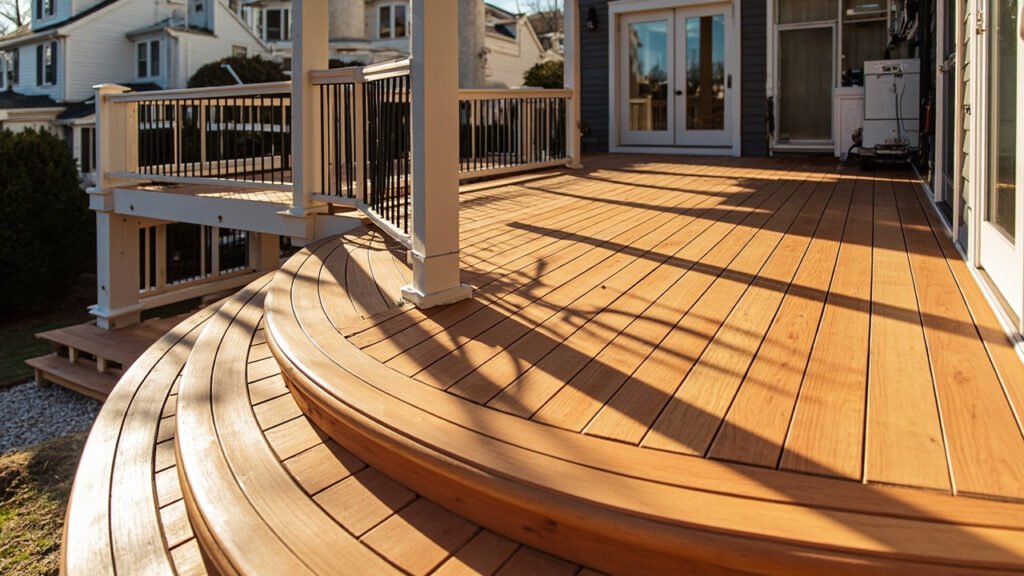
If you are a Boston-area homeowner thinking about adding or replacing deck stairs, you likely have questions about design options, safety requirements, and what to expect during installation. Deck stairs do more than connect your elevated deck to the ground—they are a prominent feature that affects how you use your outdoor space every day. Getting them right matters, especially in New England where our demanding weather tests every outdoor structure year after year. This guide walks you through everything you need to know about deck stairs in Boston, from planning to completion.
Why Boston Weather Makes Deck Stairs Tricky
Living in Greater Boston means your deck stairs face real challenges. Our hot, humid summers, cold winters, and generous snowfall all take their toll. When planning deck stairs for your Boston home, you need to think about how moisture, temperature swings, and ice will affect your investment over time.
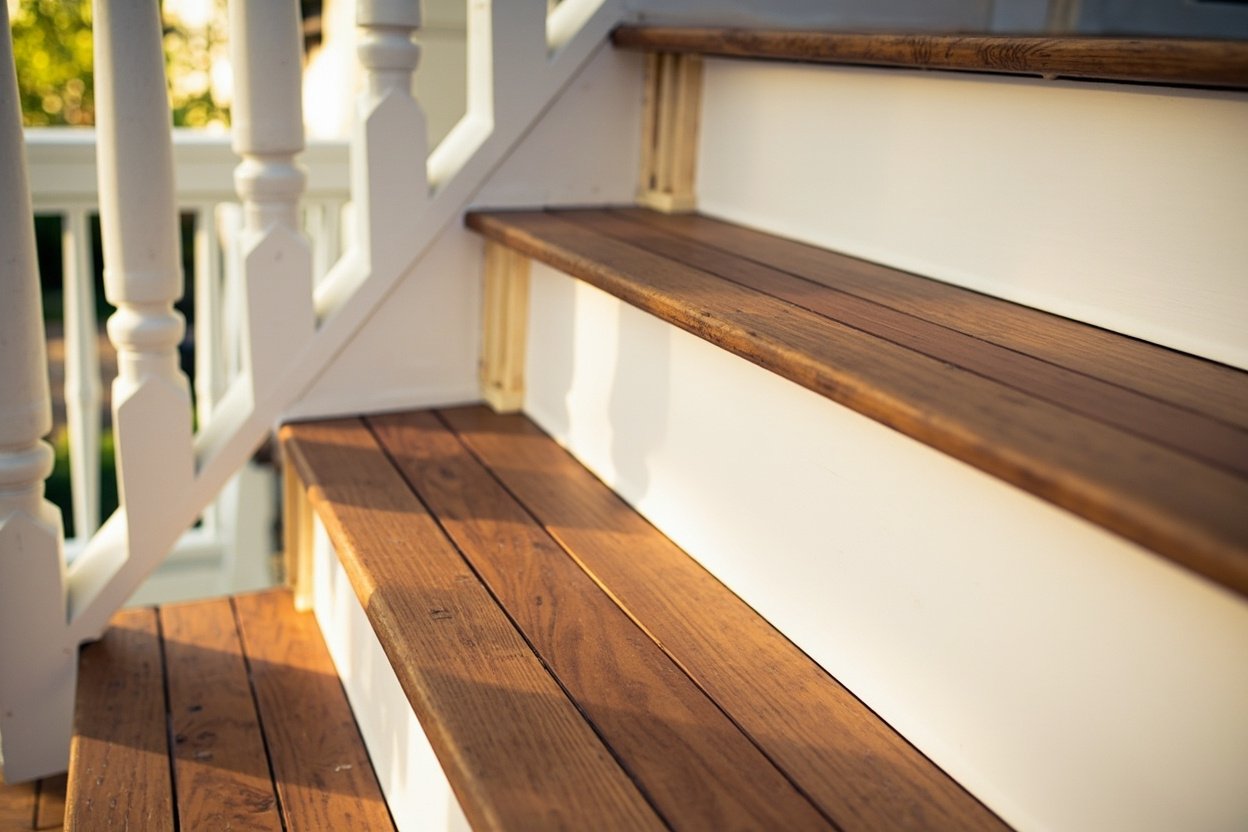
One of the most important structural considerations is the frost line. In Massachusetts, frost can penetrate the ground quite deeply during winter. Your stair footings must extend below this frost line to prevent heaving and shifting come spring. A contractor who understands Boston conditions will make sure your stairs are built on a solid foundation that can handle seasonal freeze-thaw cycles.
Weather exposure also influences your material choices. Snow and ice accumulation on stairs creates both a slipping hazard and added weight stress. Proper drainage planning and non-slip surfaces are essential for Boston-area deck stairs. The good news is that modern materials like Composite decking and improved construction techniques help your stairs hold up better against our challenging climate.
Key Design Considerations for Your Deck Stairs
When planning deck stairs for your home, there are several factors to weigh carefully. The first is how your stairs will integrate with your existing deck and home structure. Your stairs should feel like a natural extension of your deck rather than an afterthought.
Think about the size and layout of your stairs. Standard residential requirements call for stairs between 36 and 48 inches wide, with treads that are at least 10 inches deep and risers no taller than 7 to 8 inches. These dimensions affect how comfortable your stairs are to climb. Steep stairs can be difficult and potentially dangerous, especially for family members with mobility concerns.
Material selection is another big decision. Traditional pressure-treated wood remains popular because it handles Boston weather well and costs less upfront. Many homeowners also explore Composite decking for stairs and railings because it resists fading, warping, and moisture damage with less ongoing maintenance than wood. Your contractor can help you understand the pros and cons of each material for your specific situation.
Structural Framing: The Foundation of Safe Stairs
The strength of your deck stairs depends entirely on proper structural framing. Even the most beautiful stairs will develop problems if they are not built on a solid framework. This is where quality craftsmanship really matters.
Pressure-treated lumber is typically used for stair stringers—the diagonal supports that run beneath the treads. These stringers carry the weight of everyone using the stairs, so they need to be properly sized and adequately supported. Your contractor should use hardware specifically rated for outdoor use, as regular fasteners can corrode quickly in our humid climate.
The connection between your stairs and your deck is another critical point. Stairs must be securely attached to the deck framing, not just the deck surface. This typically involves bolting or using heavy-duty brackets to create a strong, stable connection that will not loosen over time.
Flashing is often overlooked but plays an important role in protecting your deck structure. Properly installed flashing directs water away from where the stairs attach to your deck, helping prevent wood rot and structural damage over the years.
Railing Safety and Compliance
Railings are not optional extras—they are a critical safety feature required by building codes. In Massachusetts, residential deck stairs generally require railings when there are four or more treads. Even if your stairs technically do not require a railing, adding one makes your space safer and more usable.
The height requirement for deck stair railings is typically 34 to 38 inches measured from the tread nosing. Balusters, or the vertical supports between the top rail and bottom rail, must be spaced so that a 4-inch sphere cannot pass through. These requirements exist to prevent falls and keep children safe.
Railing styles range from traditional wood to aluminum and even glass systems. Your choice affects both the look of your stairs and how much maintenance they will need. Some homeowners prefer the classic look of wood railings that can be stained or painted to match their deck. Others appreciate the low-maintenance benefits of aluminum or the clean, modern appearance of glass railings.
Navigating Permits and Inspections
Before starting any deck stair project in Boston or the surrounding communities, check with your local building department about permit requirements. Most municipalities in the Greater Boston area require permits for new deck construction, and adding or replacing stairs often triggers permit requirements as well.
The permitting process typically involves submitting plans and having inspections at various stages of construction. Inspectors will check that footings are below the frost line, that structural connections meet code requirements, and that railings are properly installed. While this may seem like extra hassle, it exists to protect you and ensure your stairs are safe.
Different towns have slightly different requirements, so working with a contractor familiar with local codes in Newton, Brookline, Wellesley, or whichever community you call home can streamline the process. They will know what to expect and how to make sure your project meets all necessary standards.
Maintaining Your Deck Stairs for the Long Haul
Once your deck stairs are installed, a little regular maintenance helps them last for many years. Boston weather is tough on outdoor structures, but routine care makes a real difference.
Plan to clean your stairs at least twice a year, removing debris and checking for any damage. After winter, give your stairs a thorough inspection to look for loose boards, rusted hardware, or any signs of water damage. Tighten any loose connections and replace damaged components before they worsen.
If you choose wood stairs, periodic sealing or staining helps protect against moisture penetration. Your contractor can recommend appropriate products and a maintenance schedule based on the specific materials used. Composite decking requires less maintenance but still benefits from occasional cleaning to remove dirt and prevent mold.
Pay attention to the areas where stairs meet your deck and where they meet the ground. These transition points are most vulnerable to water damage and should be kept clear of soil and debris that can trap moisture against the wood.
Making the Right Choice for Your Home
Whether you are adding stairs to a new deck or replacing worn-out stairs on an existing structure, taking time to plan pays off. Think about how you use your outdoor space, who will be using the stairs, and what level of maintenance you are comfortable with.
Working with experienced professionals who understand Boston-area conditions makes a significant difference. They can guide you through material choices, ensure proper structural framing, and handle the details that make stairs safe and durable in our climate.
Ready to discuss your project? Visit our deck and porch services page or call (857) 837-2100 to schedule a free onsite estimate.
Advanced Deck & Porch is a brand owned and operated by Sun Shore Construction. All estimates, contracts, and construction services are provided by Sun Shore Construction.