
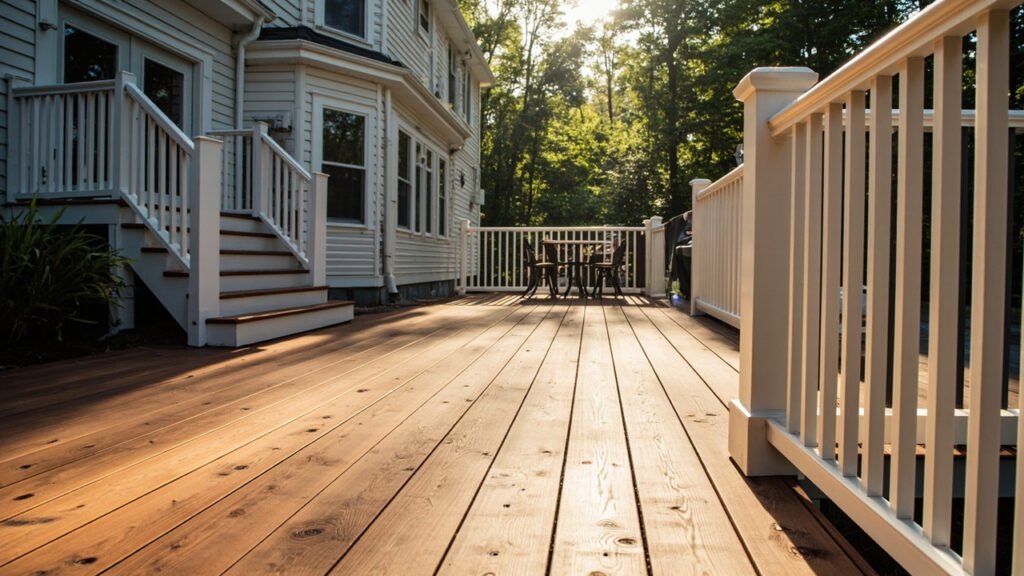
Replacing an aging or damaged deck is a significant investment for any Greater Boston homeowner. Unlike simple repairs, a full deck replacement involves important decisions about structural integrity, material selection, and compliance with local building codes. Understanding what the process entails helps you plan with confidence and avoid costly surprises down the road.
Why Deck Replacement Is Different in the Boston Climate
Boston homeowners face unique challenges that make deck replacement more complex than in milder regions. New England winters bring freezing temperatures, snow accumulation, and freeze-thaw cycles that stress outdoor structures year after year. These conditions accelerate wear on decking materials, fasteners, and structural components alike.
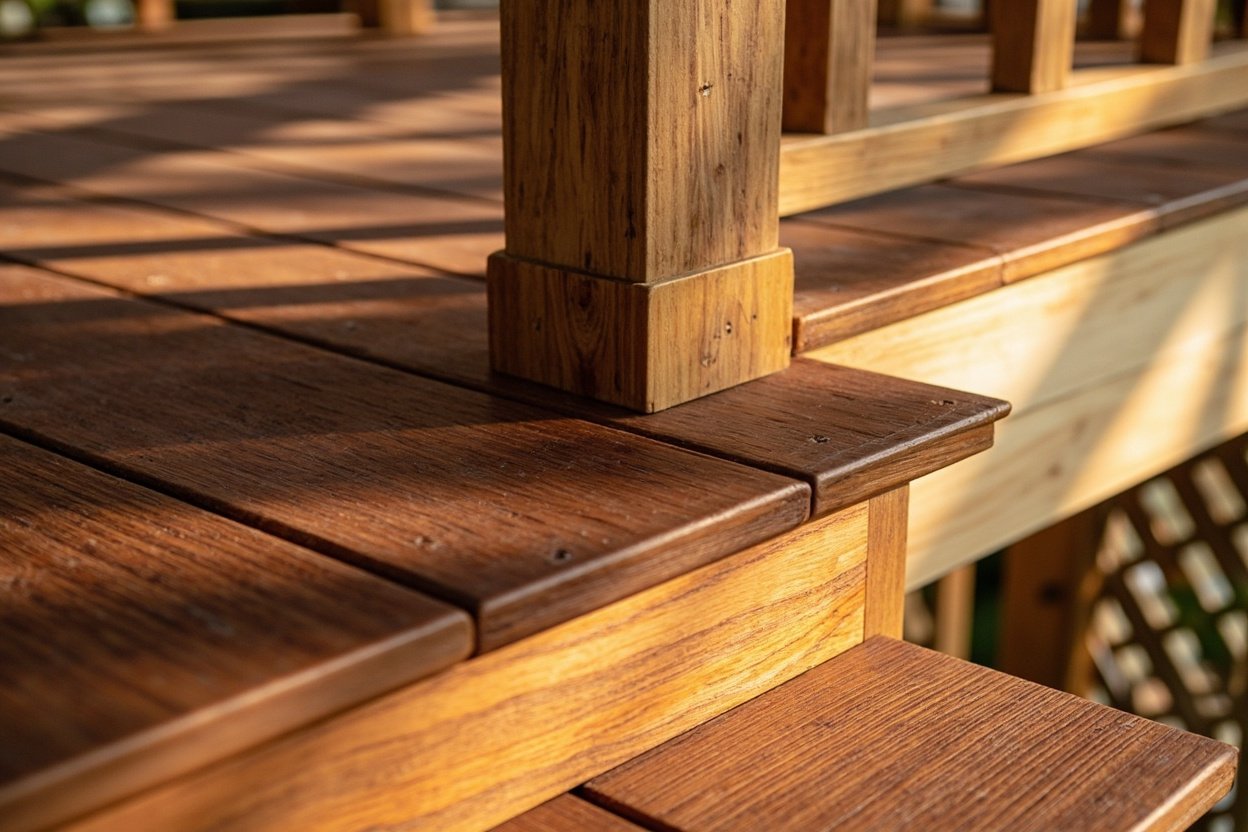
Weather exposure in Greater Boston means your deck must endure heavy snow loads, driving rain, and intense summer sun within a relatively short building season. This is why proper structural framing and material choices matter so much here. A deck built with shortcuts may look fine initially but often develops problems within just a few seasons.
Additionally, many Boston-area homes were built decades ago with decks that do not meet modern building standards. A full replacement allows you to address outdated framing, inadequate ledger board connections, and non-compliant railings that would simply be patched over in a repair scenario.
Structural Framing: The Foundation of a Lasting Deck
The hidden structural framing determines how well your deck performs under Boston conditions. Proper framing starts with correctly sized support posts, beams, and joists sized according to your deck’s dimensions and expected loads. In snow-prone areas like Newton, Wellesley, and Weston, this often means increasing joist size or reducing joist spacing compared to standard recommendations.
Ledger board attachment deserves special attention, particularly for decks attached to Boston-area homes with existing siding and sheathing. The connection between your deck and your home must be properly flashed and mechanically fastened to code. This detail prevents water intrusion that causes wood decay and compromises structural integrity over time.
Your deck replacement contractor should assess existing conditions thoroughly before beginning. This includes checking for wood rot in existing framing, verifying proper footing depth below the frost line, and evaluating whether the ground is stable enough to support new concrete footings in your specific neighborhood.
Choosing Deck Materials for New England Durability
Material selection significantly impacts long-term maintenance needs and overall value. Several options work well for Boston decks, each with distinct advantages worth understanding before you decide.
- Composite decking resists moisture absorption, warping, and splintering better than natural wood, making it particularly suitable for shaded decks in wooded areas like Weston and Lexington
- Treated lumber remains a cost-effective choice for framing and decking surfaces, though it requires ongoing sealing maintenance in humid Boston summers
- Hardwood options like ipe offer exceptional durability but come with higher material costs and require specialized fastening systems
- PVC decking provides excellent stain resistance and low maintenance for homeowners who prefer not to seal their deck annually
For most Greater Boston homeowners, composite decking offers an attractive balance of durability and convenience. It handles snow and ice accumulation without the splintering concerns that plague natural wood surfaces, and it does not require the annual sealing that treated lumber demands. However, the right choice depends on your specific situation, budget, and how you plan to use your outdoor space.
Railing Safety and Stairs: Meeting Boston Building Codes
Railing safety and proper stair construction are areas where many older Boston-area decks fall short of current requirements. Massachusetts building codes specify minimum railing height, baluster spacing, and handrail dimensions that older decks often do not meet.
Railings must be at least 36 inches tall for residential decks, with balusters spaced no more than 4 inches apart to prevent child entrapment hazards. The handrail must be graspable and continuous along the entire flight of stairs, returning to the deck surface at top and bottom. These requirements exist for safety, and your deck replacement must bring your structure into compliance.
Stair construction involves careful attention to rise and run dimensions. Each step must be consistent within a quarter-inch tolerance, which sounds minor but matters significantly for safe foot placement, especially on stairs serving older family members. Landing dimensions, lighting requirements, and clearance at the bottom of stairs also factor into code compliance for Boston-area municipalities.
Local building departments in Brookline, Quincy, Braintree, and Milton may have additional requirements beyond state minimums, so working with a contractor familiar with your specific town’s permitting office streamlines the approval process considerably.
Planning Your Deck Replacement Around Boston Seasons
Timing your deck replacement wisely improves both construction quality and your overall experience. Spring through early fall typically offers the best conditions for outdoor construction in the Greater Boston area, with daylight hours and dry weather allowing continuous progress.
Fall installations work well if your contractor can pour concrete footings before ground freezing. Once temperatures drop consistently below freezing, concrete curing becomes more complicated and may extend timelines. That said, material delivery scheduling and contractor availability often improve during shoulder seasons compared to peak summer months.
Maintenance planning should inform your material decisions from the start. If you prefer to minimize seasonal upkeep, composite decking or PVC options reduce the annual attention your deck requires. Treated wood surfaces in Boston typically need sealing every two to three years to maintain their appearance and durability through winter.
Your replacement timeline should include buffer time for the permitting process. Boston-area municipalities typically require building permits for deck replacements, with review times ranging from a few days to several weeks depending on your specific town. Advance planning with your contractor helps ensure materials arrive and crews are scheduled efficiently once permits are approved.
Ready to discuss your project? Visit our deck and porch services page or call (857) 837-2100 to schedule a free onsite estimate.
Advanced Deck & Porch is a brand owned and operated by Sun Shore Construction. All estimates, contracts, and construction services are provided by Sun Shore Construction.