
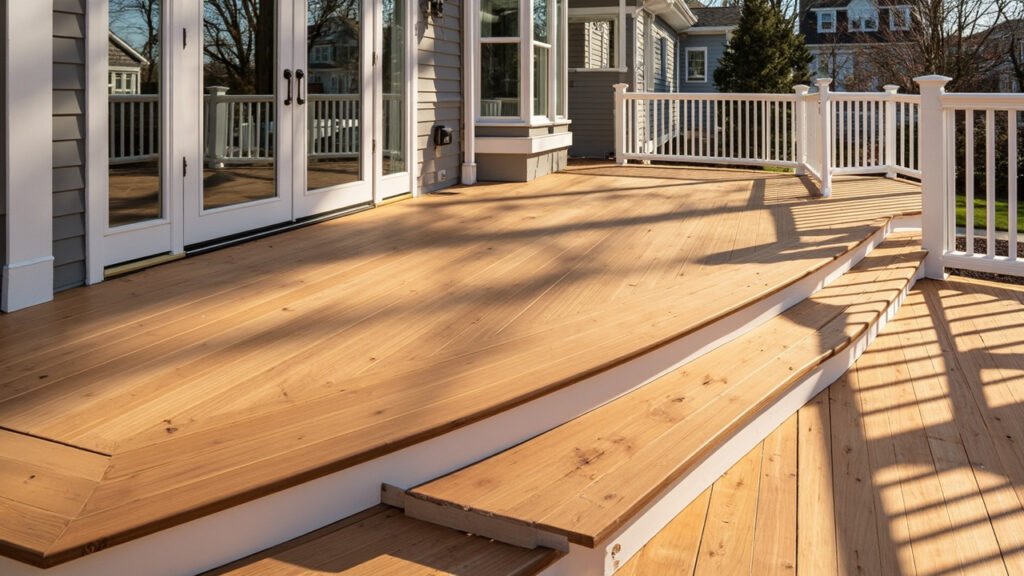
Building a deck in the Boston area is a rewarding investment that expands your living space and adds value to your home. However, deck construction in Greater Boston comes with unique considerations that homeowners in Newton, Brookline, Wellesley, and surrounding communities should understand before breaking ground. From navigating local permits to choosing the right deck materials for New England weather, this guide walks you through the key factors that make deck building successful in our region.
Understanding Boston-Area Climate Challenges for Deck Construction
New England weather is tough on outdoor structures. Your deck will face everything from humid summers to harsh winters with freezing temperatures, snow, and ice. This weather exposure means that proper structural framing and material selection are critical from day one. Frost heave can shift footings, moisture can warp wood, and freeze-thaw cycles can damage inferior materials over time. Working with experienced contractors who understand these regional challenges helps ensure your deck remains safe and stable for years to come.
Seasonal planning matters too. Many homeowners in communities like Lexington, Needham, and Natick begin planning their deck projects in late winter or early spring, allowing time for permits and scheduling before the busy construction season. Building during milder months gives your new deck time to settle properly before facing its first Boston winter.
Choosing the Right Deck Materials for Your Boston Home
When it comes to deck materials, Boston homeowners have several solid options. Traditional pressure-treated lumber remains popular for its affordability and availability. However, Composite decking has gained significant traction in communities like Wellesley, Weston, and Westwood because it resists moisture, fading, and decay without requiring annual sealing or staining. Many homeowners appreciate that composite materials hold up exceptionally well against our region’s freeze-thaw cycles and humidity swings.
Natural hardwoods like cedar or ipe offer beautiful aesthetics but require more maintenance to combat New England weather exposure. Whatever material you choose, proper ventilation beneath the deck and adequate spacing between boards helps prevent moisture buildup that can lead to premature deterioration.
Structural Framing and Foundation Requirements
The hidden structure of your deck matters just as much as its surface appearance. Proper structural framing begins with correctly sized footings that extend below the frost line to prevent shifting during winter freeze cycles. In communities throughout Greater Boston and MetroWest, building codes specify minimum requirements for post sizes, beam spans, and joist spacing based on deck height and anticipated loads.
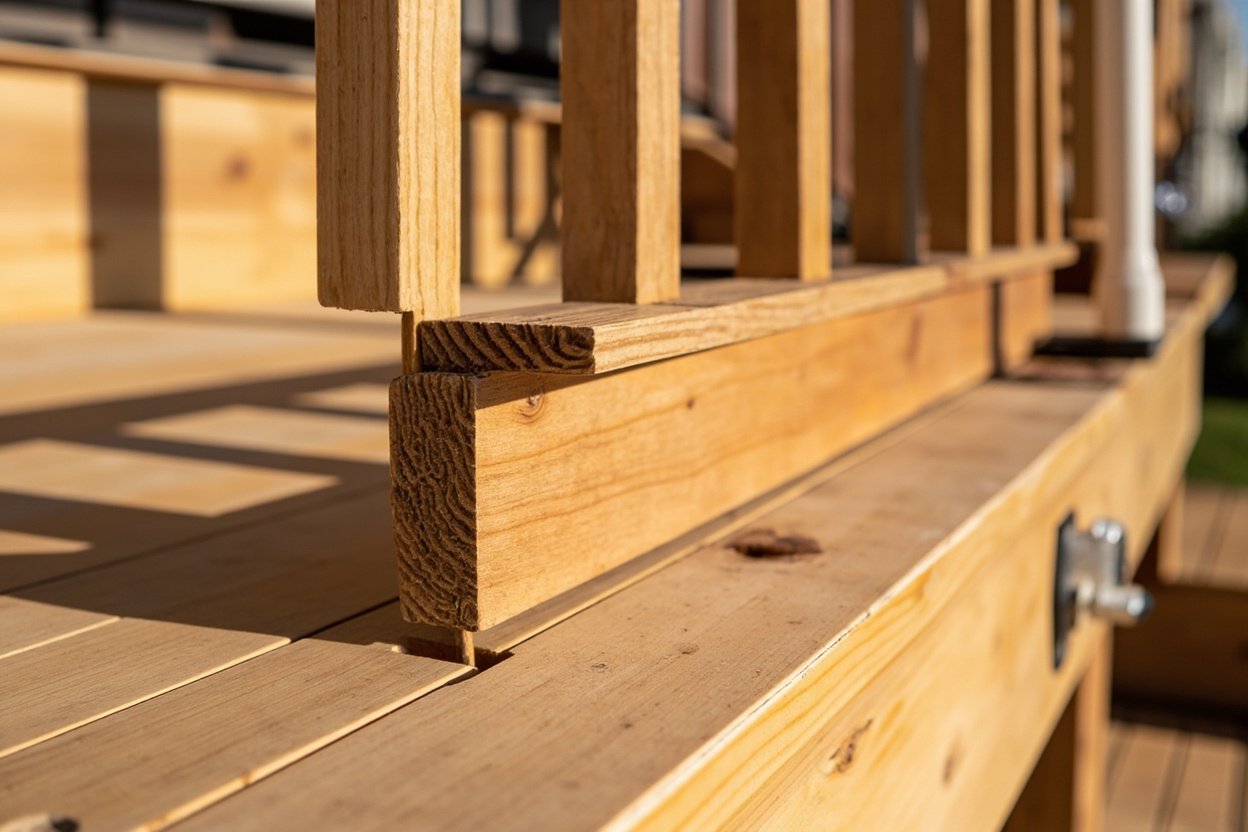
Railing safety is non-negotiable, especially for elevated decks common in Boston-area homes with sloped yards. Railings must meet specific height requirements and baluster spacing to prevent accidents. Deck stairs require careful attention to rise and run dimensions, with proper landing areas at both top and bottom. Your contractor should ensure that stair stringers are adequately supported and that handrails meet code requirements for grip and durability.
Navigating Permits and Local Regulations
Most municipalities in Greater Boston require permits for new deck construction and significant renovations. Requirements vary by town, so whether you are in Quincy, Braintree, Weymouth, or Canton, you will need to check with your local building department regarding specific rules for your area. Generally, permits involve submitting site plans showing setbacks, height specifications, and structural details.
In communities like Brookline, Newton, and Milton with historic districts or homeowner associations, additional review processes may apply. Experienced local contractors are familiar with these requirements and can help streamline the permitting process for your project.
Planning for Long-Term Deck Maintenance
Even the best-built deck benefits from regular care. Creating a maintenance plan from the start helps protect your investment and extends the life of your outdoor space. Consider these routine tasks as part of your ongoing deck care:
- Inspect annually for loose boards, protruding fasteners, or signs of rot, particularly after winter
- Clean surfaces seasonally to remove dirt, mildew, and debris that trap moisture
- Check railing connections and stair stability before summer entertaining season
- Trim nearby vegetation to maintain clearance and airflow around the structure
- Address minor repairs promptly to prevent small issues from becoming major problems
Composite decking typically requires less maintenance than wood, needing only periodic cleaning rather than annual staining or sealing. However, all deck materials benefit from vigilant inspection and timely repairs after severe weather events.
Why Local Experience Matters for Your Deck Project
Working with a contractor who understands Boston-area conditions makes a meaningful difference in your deck construction experience. Local professionals know which materials perform best in our climate, understand municipality-specific permit requirements, and have established relationships with building inspectors throughout Greater Boston and MetroWest. This experience helps prevent costly mistakes and keeps your project moving forward smoothly from design through completion.
Whether you are building a new rear deck for family gatherings, reconstructing an aging structure, or adding a welcoming front porch to your Milton or Norwood home, taking time to plan properly leads to better results. Understanding the unique demands of deck construction in Boston communities ensures your new outdoor space will serve your family well through many New England seasons.
Ready to discuss your project? Visit our deck and porch services page or call (857) 837-2100 to schedule a free onsite estimate.
Advanced Deck & Porch is a brand owned and operated by Sun Shore Construction. All estimates, contracts, and construction services are provided by Sun Shore Construction.