
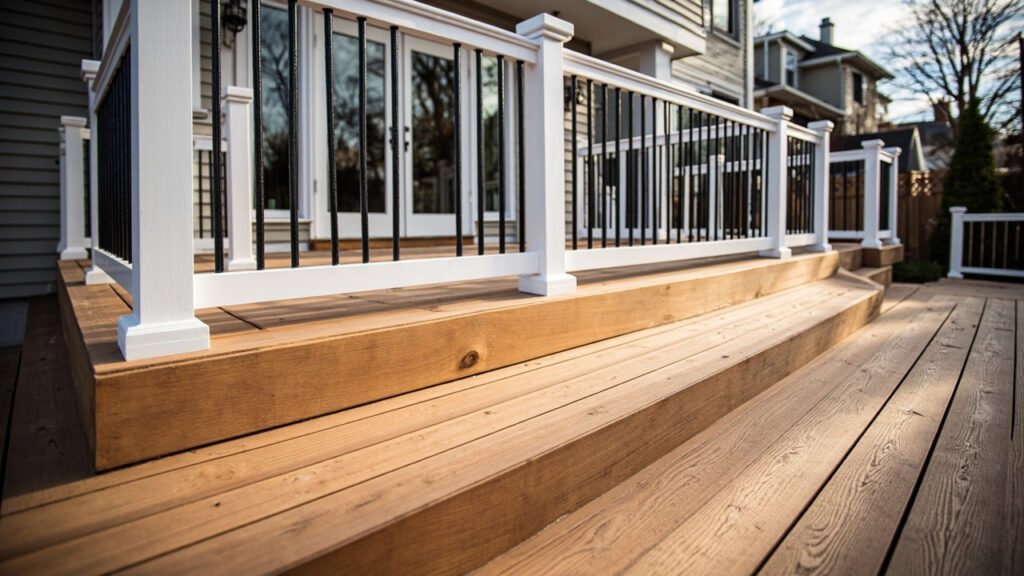
If your deck has seen better days, you are not alone. Many homeowners throughout Greater Boston discover that their outdoor structures need more than routine repairs. Years of moisture, freezing temperatures, and general wear take their toll. When that point arrives, a full deck rebuild becomes the smart investment that restores both safety and value to your home.
At Advanced Deck & Porch, we have helped homeowners across Boston, Newton, Brookline, Wellesley, and surrounding communities navigate the rebuild process from first assessment through final inspection. This guide walks you through what to expect when planning a deck rebuild in our region.
Why Deck Condition Deteriorates in Greater Boston
Boston-area weather creates particular challenges for outdoor structures. Our freeze-thaw cycles, significant snowfall, and humidity variations put stress on even well-built decks. Wood that appears solid in spring may show hidden decay by fall. Connection points weaken. Structural framing can compromise without obvious visible signs.
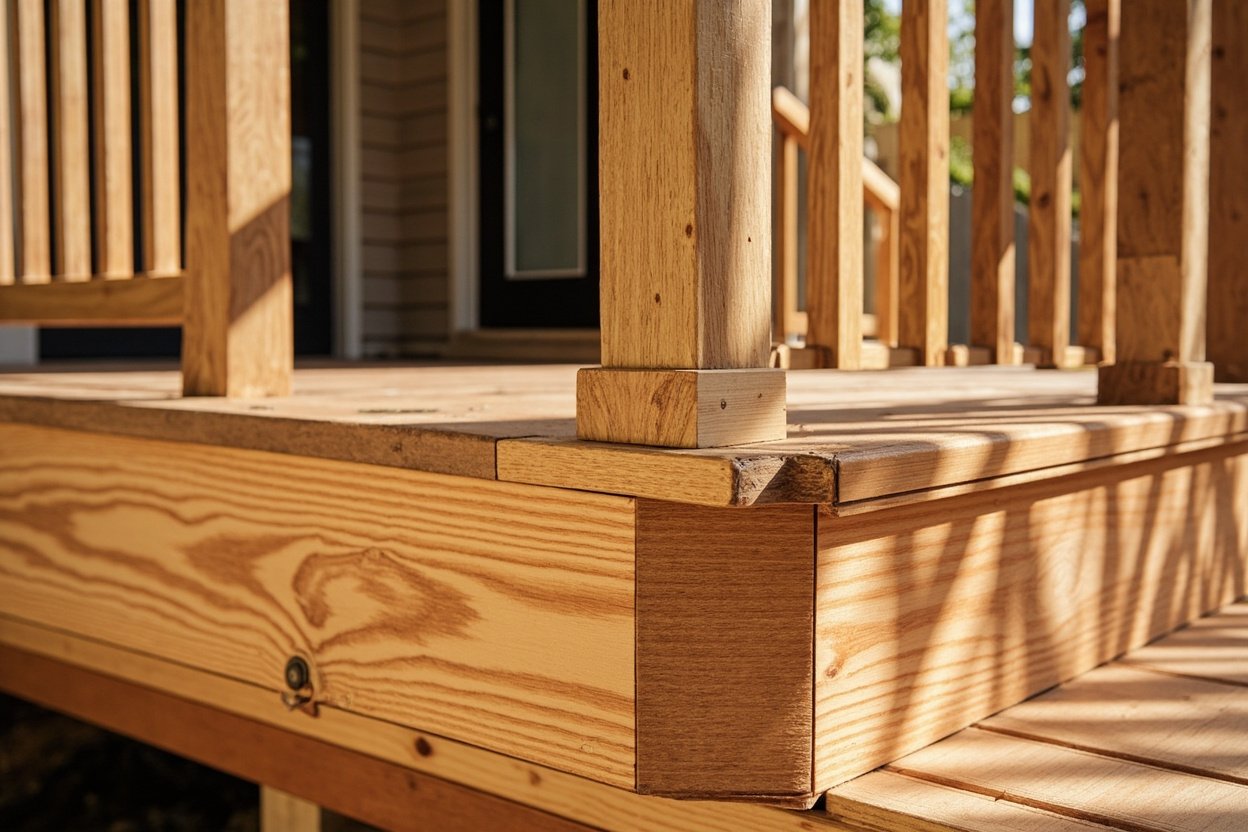
Common signs you need more than repairs include warped or soft decking boards, rusted fasteners, wobbling railings, settlement in support posts, and codes that no longer meet current safety standards. If your deck is 20 years old or older, it likely was built to previous code requirements that have since been updated.
Structural Framing: The Foundation of Any Deck Rebuild
A proper deck rebuild starts beneath the surface. Structural framing must be designed to handle local load requirements. In Greater Boston, snow loads can be substantial, and your deck framing needs adequate support to remain stable year after year.
During a rebuild, we assess several critical elements:
- Post foundations and footings below the frost line
- Beam and joist sizing for proper span distances
- Ledger board attachment to your home
- Cross-bracing for lateral stability
- Proper ventilation to prevent moisture accumulation
Skipping or cutting corners on structural framing leads to problems that surface-level materials cannot fix. That is why detailed planning at this stage matters for the long-term performance of your deck.
Choosing Deck Materials for Boston Weather
Material selection affects both appearance and maintenance requirements. In our climate, not every decking product performs equally well over time.
Pressure-treated lumber remains a popular choice for structural components because it resists decay and insect damage. For surface-level decking, homeowners increasingly choose Composite decking for its low-maintenance characteristics. Composite boards resist fading, staining, and moisture absorption. They do not require annual sealing or staining, which appeals to busy homeowners in communities like Wellesley, Weston, and Lexington.
Other options include hardwoods like Ipe and traditional cedar, though these typically require more ongoing care. We help clients weigh initial costs against long-term maintenance when selecting materials that fit their preferences and budget.
Railing Safety and Stairs: Meeting Code Requirements
Railing safety and proper stair construction rank among the most common deficiencies in older decks. Current building codes specify minimum heights, baluster spacing, and structural requirements that older structures often fail to meet.
For railings, Greater Boston municipalities generally require 36-inch minimum height for residential decks, with gaps no wider than 4 inches. Stairs must have consistent rise heights, appropriate tread depths, and handrails on at least one side when four or more steps are involved.
When rebuilding your deck, bringing these elements into compliance protects your family and prevents complications during resale or property inspections. We ensure all railing and stair components meet or exceed current standards.
Permits and Planning for Your Deck Rebuild
Most deck construction and rebuild projects in Greater Boston require building permits. Requirements vary by municipality, so understanding local rules matters before work begins.
In Boston proper, permits are administered through the Inspectional Services Department. Suburban communities like Newton, Natick, and Quincy have their own permit processes. We are familiar with requirements across our service area and handle permit applications as part of our complete rebuild services.
Typical permit requirements include:
- Site plan showing deck placement and dimensions
- Structural plans with framing details
- Material specifications
- Compliance with setback requirements
- Review fees based on project value
Planning ahead prevents delays. Most permits require one to three weeks for approval, depending on the municipality and complexity of the project. Building in buffer time for this process is wise.
Maintenance Planning for Your New Deck
Once your rebuilt deck is complete, a modest maintenance routine extends its life significantly. Even with modern materials like Composite decking, basic care prevents premature wear.
We recommend clearing snow accumulation when depth exceeds a few inches, using plastic shovels rather than metal tools that could scratch surfaces. Periodic washing removes dirt, pollen, and organic debris that promotes mildew. Annual inspections catch small issues before they become bigger problems.
For wood decking, this might include resealing every two to three years depending on exposure. Composite materials generally require only cleaning, making them attractive for homeowners who prefer minimal ongoing maintenance.
Working with a Trusted Contractor
A deck rebuild is a significant home investment. Choosing a contractor with extensive experience in Greater Boston ensures your project meets local codes, handles our climate challenges, and results in a structure that serves your family safely for years ahead.
Look for established contractors who understand structural requirements, use quality materials, and communicate clearly throughout the process. References from homeowners in your specific community can provide valuable insight into what to expect during construction.
At Advanced Deck & Porch, we bring decades of combined experience to deck rebuilds throughout Boston, Newton, Brookline, Wellesley, and all our service communities. We assess each project individually, provide clear pricing, and stand behind our craftsmanship.
Ready to discuss your project? Visit our deck and porch services page or call (857) 837-2100 to schedule a free onsite estimate.
Advanced Deck & Porch is a brand owned and operated by Sun Shore Construction. All estimates, contracts, and construction services are provided by Sun Shore Construction.