
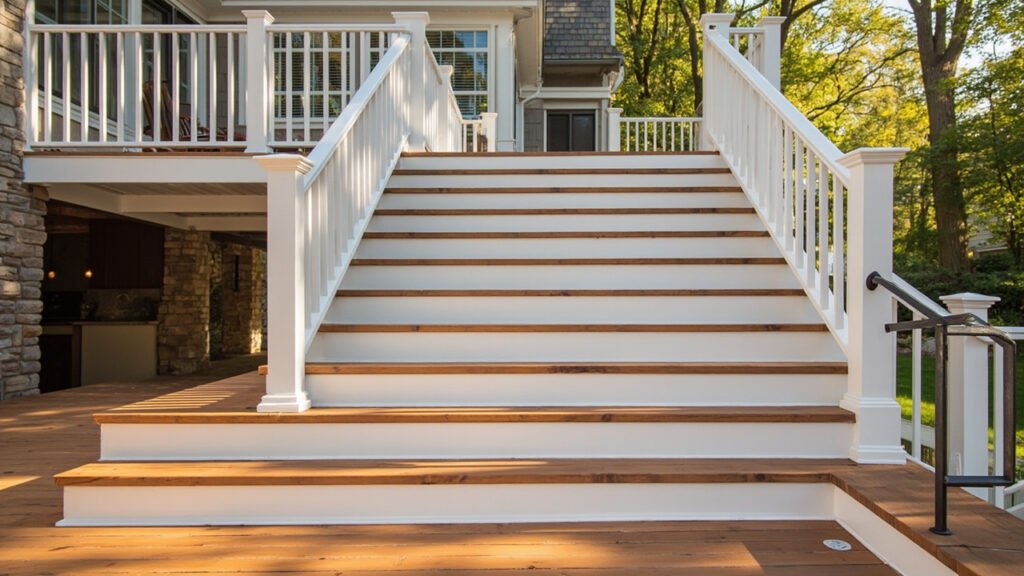
When it comes to enhancing your outdoor living space in Greater Boston, deck stairs are often the detail that ties everything together. Whether you are building a new deck, rebuilding an existing one, or simply replacing worn stairs, proper planning makes all the difference. In New England, our unique climate, varied terrain, and local building codes create specific challenges that homeowners should understand before diving into a project.
Why Deck Stairs Matter More Than You Think
Deck stairs are not just a way to get from point A to point B. They are a critical structural component of your deck system. Poorly constructed stairs can create safety hazards, lead to code violations, and shorten the lifespan of your entire deck. At Advanced Deck & Porch, we have seen countless cases where deferred stair maintenance resulted in costly deck repairs down the road. Taking time to plan your deck stairs correctly protects your investment and keeps your family safe.
Planning Your Deck Stairs for Boston Weather
Boston winters are harsh, and the freeze-thaw cycles that characterize our climate take a real toll on outdoor structures. When planning deck stairs, consider how moisture, ice, and temperature fluctuations will affect your materials over time. Proper drainage away from the stair footings prevents settling and shifting, which are common problems in areas like Newton, Brookline, and Wellesley where soil conditions vary significantly.
Your stair design should also account for snow accumulation and ice formation. Wider stairs with proper tread materials provide better traction during winter months. Many homeowners in the MetroWest region choose Composite decking for their stairs because it resists moisture absorption and does not require the same maintenance as traditional wood. This material choice proves especially valuable for high-traffic areas that see constant exposure to the elements.
Understanding Structural Framing Requirements
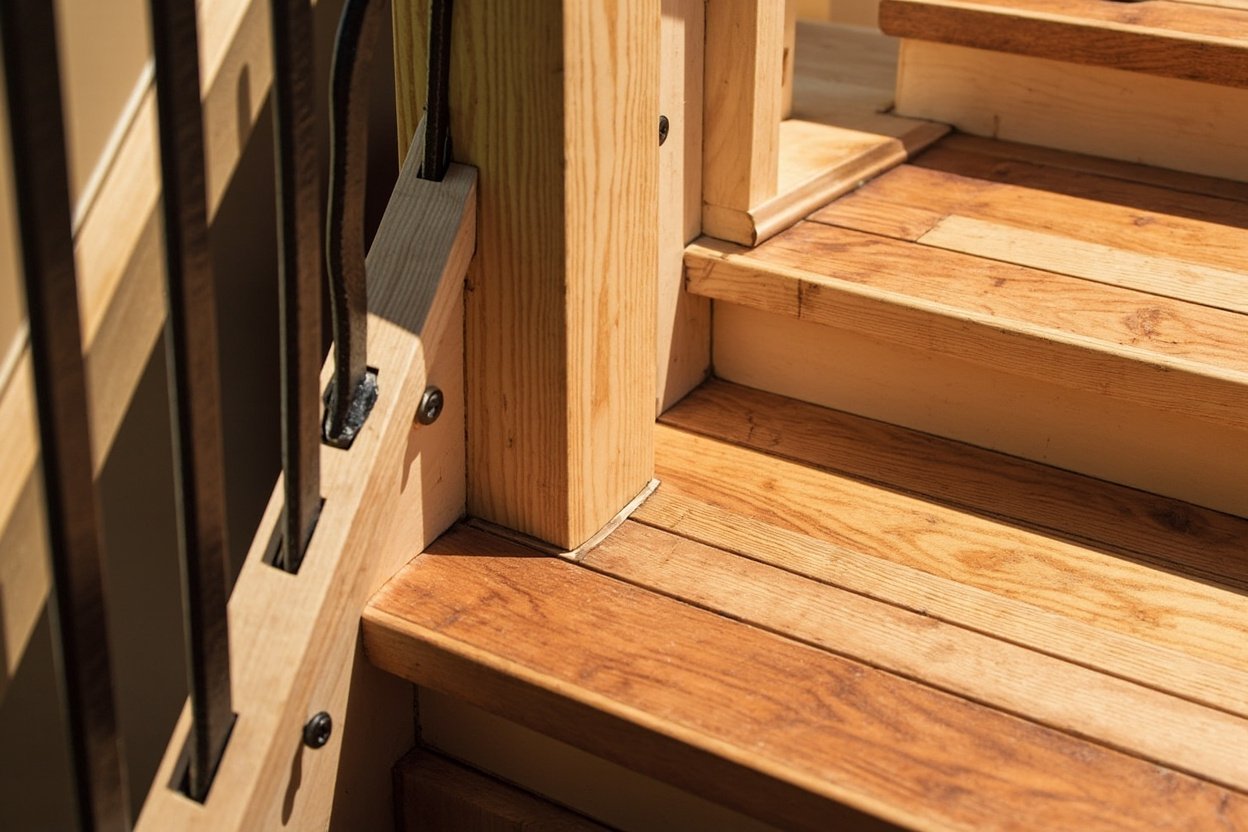
The foundation of any good set of deck stairs lies in the structural framing. Stringers, the diagonal supports that hold the treads, must be properly sized and secured to handle expected loads. In Boston, building codes specify minimum requirements for stair dimensions including rise height, run width, and headroom clearance.
Your deck stairs should be attached to the ledger board or a dedicated support beam, not just nailed to the rim joist. This connection point bears significant stress and needs proper hardware including metal connectors and bolts rather than just screws. For homes in communities like Lexington, Needham, and Weston, inspectors pay close attention to these connections during permit reviews.
Consider these essential framing elements when planning your project:
- Pressure-treated lumber for all framing members in contact with concrete or soil
- Properly spaced stringers based on tread material and expected load
- Secure attachment to deck structure using appropriate hardware
- Solid footings that extend below the frost line
Railing Safety and Code Compliance
Deck railings are not optional and they must meet specific code requirements. In Massachusetts, deck railings must be at least 36 inches tall for residential decks, with balusters spaced no more than 4 inches apart to prevent small children from slipping through. If your deck is elevated more than a certain height, you may need even taller railings.
Railing design also affects the overall aesthetic of your outdoor space. From traditional wood railings to modern metal and glass options, your choice should balance safety, durability, and visual appeal. In historic neighborhoods like Brookline and Milton, homeowners often prefer railings that complement their home’s architectural style while meeting modern safety standards.
Materials matter significantly for railings exposed to Boston weather. Aluminum and vinyl offer low-maintenance solutions, while powder-coated steel provides exceptional durability. If you prefer the look of wood, choose decay-resistant species and plan for regular sealing to extend the life of your railings.
Navigating Permits and Local Regulations
Most deck projects in the Greater Boston area require building permits, and deck stairs are included in this requirement. Communities like Quincy, Braintree, and Weymouth have their own specific codes layered on top of the Massachusetts Building Code, so requirements can vary. A reputable contractor will understand these local nuances and handle the permit process for you.
Permit applications typically require detailed plans showing dimensions, materials, footings, and connections. If your deck is close to property lines or involves significant modifications to your home’s structure, you may need additional approvals. Planning ahead for these requirements prevents delays and ensures your project proceeds smoothly.
Maintenance Planning for Long-Term Performance
Once your deck stairs are built, regular maintenance extends their useful life significantly. Inspect your stairs each spring and fall, checking for loose boards, wobbly railings, and signs of rot or decay. Pay special attention to the areas where stringers meet the deck and where footings contact the ground.
Cleaning debris from between treads prevents moisture buildup and reduces slip hazards. If you have wooden stairs, applying a fresh coat of sealant every couple of years helps protect against New England weather exposure. Composite decking requires less maintenance but still benefits from periodic cleaning to prevent mold and mildew, particularly in shaded areas.
Addressing minor repairs promptly prevents them from becoming major structural problems. A loose tread today could become a safety hazard tomorrow, especially during the icy conditions we see regularly in Natick, Wayland, and Bedford throughout winter.
Whether you are constructing a new deck with stairs, rebuilding an aging structure, or simply upgrading your existing stairs for safety and appearance, working with experienced professionals makes the process much smoother. Advanced Deck & Porch serves homeowners throughout Boston, Greater Boston, and MetroWest communities including Newton, Brookline, Wellesley, Weston, Westwood, Lexington, Needham, Natick, Wayland, Bedford, Burlington, Billerica, Quincy, Braintree, Weymouth, Milton, Canton, Norwood, and Acton.
Ready to discuss your project? Visit our deck and porch services page or call (857) 837-2100 to schedule a free onsite estimate.
Advanced Deck & Porch is a brand owned and operated by Sun Shore Construction. All estimates, contracts, and construction services are provided by Sun Shore Construction.