
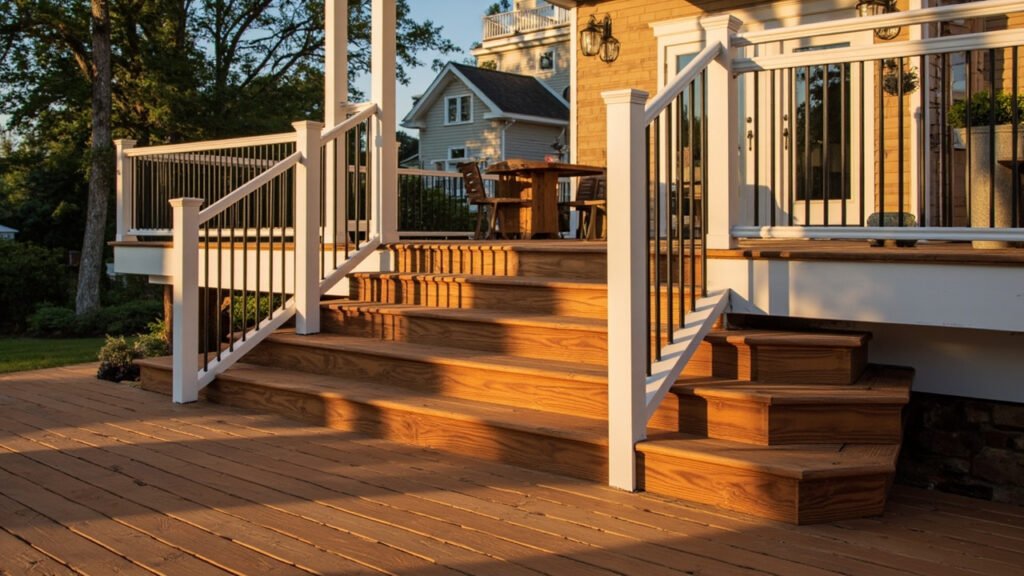
When it comes to adding or replacing deck stairs in the Boston area, homeowners face unique challenges that go far beyond simple installation. New England weather, local building codes, and the specific demands of properties throughout Greater Boston require careful planning and professional expertise. At Advanced Deck & Porch, we have helped hundreds of homeowners in Boston, Newton, Brookline, Wellesley, and surrounding communities design and build safe, durable deck stairs that stand up to everything our climate throws at them.
Why Boston Weather Demands Special Attention to Deck Stairs
Living in Greater Boston means your deck stairs will endure extreme temperature swings, heavy snowfall, ice, and significant moisture exposure throughout the year. These conditions put tremendous stress on both the structural framing and the surface materials of any outdoor staircase. Unlike interior stairs, deck stairs face freeze-thaw cycles that can compromise lesser-quality installations within just a few seasons.
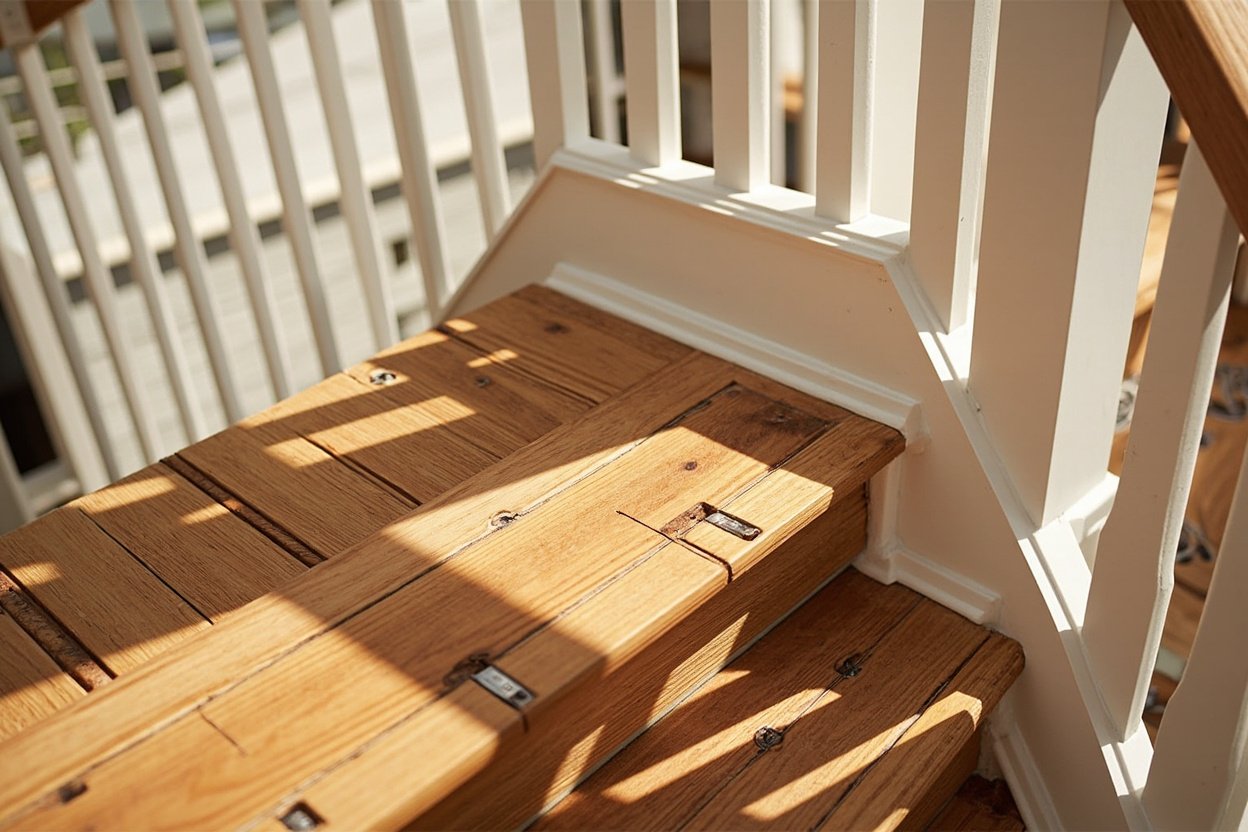
Proper planning for weather exposure starts with material selection. Composite decking has become increasingly popular for stair treads because it resists moisture absorption, won’t splinter, and maintains its appearance even after repeated freeze-thaw cycles. While traditional wood pressure-treated lumber remains a solid choice for structural components, using composite or capped composite materials for the visible walking surfaces can dramatically extend the life of your stairs and reduce ongoing maintenance demands.
Understanding Boston Area Deck Stair Requirements
Building codes in Massachusetts, including Boston proper and communities like Quincy, Braintree, and Westwood, follow the state building code with specific requirements for residential deck stairs. These regulations address everything from minimum tread depth and maximum riser height to handrail specifications and landing requirements.
In general, most residential deck stairs must meet these baseline standards:
- Treads measuring at least 10 inches from front to back
- Risers no taller than 7-3/4 inches
- Consistent riser heights across the entire staircase
- Handrails on any stairway with four or more risers
- Proper landing at both top and bottom of stairs
- Minimum clearance height above the stairs
Before beginning any deck stairs project, particularly in historic neighborhoods or properties with existing structures in Boston and surrounding towns, it is important to check with your local building department. Communities like Lexington, Needham, and Weston may have additional requirements or review processes that affect your project timeline and scope.
Choosing Materials for Long-Lasting Deck Stairs
The materials you select for your deck stairs impact not only appearance but also safety, maintenance requirements, and long-term durability. Deck materials for stairs need to handle heavy foot traffic, resist slipping when wet or icy, and maintain structural integrity despite New England weather exposure.
Composite decking has emerged as a top choice for Boston-area homeowners because it offers several advantages specific to our climate. Unlike traditional wood, composite materials won’t absorb moisture, warp, or crack during winter months. Many composite products also include textured surfaces that provide better traction during rainy conditions or light snow.
For homeowners who prefer the classic look of natural wood, select grades of pressure-treated lumber remain a reliable option for stair treads. The key is choosing properly treated lumber rated for ground contact if there is any possibility of direct moisture exposure. Cedar and redwood offer natural resistance to decay but require regular sealing to maintain their appearance in our climate.
Whatever surface material you choose, the structural framing beneath must be built to last. We recommend using pressure-treated lumber rated for outdoor use for all framing members, with proper hardware and connectors designed to resist corrosion from moisture and deicing salts.
Railing Safety and Code Compliance
Railing safety is not optional when it comes to deck stairs in the Boston area. Proper railings prevent falls and injuries while ensuring your installation meets local code requirements. The building code specifies minimum railing height, maximum spacing between balusters, and requirements for handrail gripping surfaces.
For deck stairs serving elevated platforms, we typically recommend continuous handrails on both sides of the staircase. Handrails should be positioned between 34 and 38 inches above the stair nosing and should be easy to grip securely. This is particularly important for households with elderly family members or young children.
Railing materials range from traditional wood to aluminum, vinyl, and composite systems. Each offers different aesthetics, maintenance requirements, and price points. Aluminum and composite railings have gained popularity in recent years because they resist corrosion and maintain their appearance with minimal upkeep, which matters significantly given our exposure to road salts and winter conditions.
Maintenance Planning for Your Boston Deck Stairs
Even the best-installed deck stairs benefit from regular maintenance, especially in Massachusetts weather conditions. Establishing a maintenance planning routine helps extend the life of your investment and catch small problems before they become expensive repairs.
We recommend inspecting your deck stairs each spring and fall. Look for loose boards, signs of rot in the framing, wobbly railings, and any hardware that has worked loose during winter months. Clean debris from between treads and from any drainage areas to prevent moisture buildup. If you have wood stairs, plan to seal or stain them every two to three years to maintain weather resistance.
For composite decking stairs, maintenance is generally simpler. Regular cleaning with mild soap and water removes most surface dirt and mildew. Most composite products never require sealing or staining, though some owners choose to apply specialized composite deck cleaners annually for best appearance.
Professional Installation Makes the Difference
Whether you need entirely new deck stairs as part of a new deck construction project or are replacing worn stairs on an existing deck, professional installation ensures your stairs are safe, code-compliant, and built to last. Proper structural framing is especially critical, as stairs bear concentrated loads that can quickly expose any weakness in design or construction.
Advanced Deck & Porch serves homeowners throughout Boston, Greater Boston, and MetroWest communities including Newton, Brookline, Wellesley, Weston, Westwood, Lexington, Needham, Natick, Wayland, Bedford, Burlington, Billerica, Quincy, Braintree, Weymouth, Milton, Canton, Norwood, and Acton. Our team understands the specific challenges of building in New England and works with each homeowner to design stairs that meet their needs, complement their home, and comply with local requirements.
Ready to discuss your project? Visit our deck and porch services page or call (857) 837-2100 to schedule a free onsite estimate.
Advanced Deck & Porch is a brand owned and operated by Sun Shore Construction. All estimates, contracts, and construction services are provided by Sun Shore Construction.