
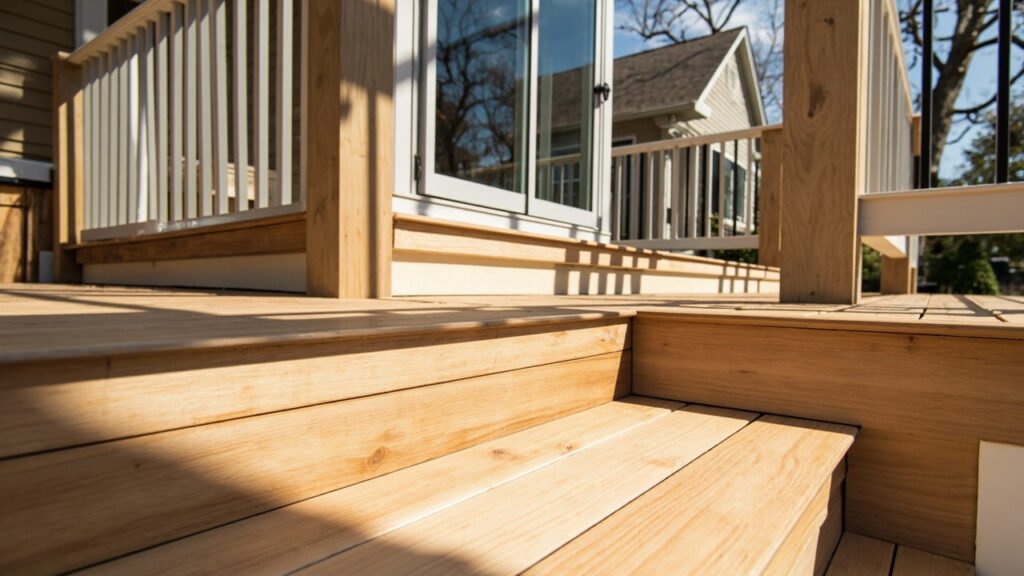
Adding or rebuilding deck stairs in the Boston area involves more than just attaching steps to your deck. From weather exposure challenges to local permit requirements, there are several factors that determine whether your stairs will be safe, durable, and code-compliant. At Advanced Deck & Porch, we specialize in new deck construction, deck repairs, and deck stairs throughout Boston, Greater Boston, and MetroWest, and we want to share what every local homeowner should understand before getting started.
Why Boston Weather Makes Deck Stairs a Bigger Project Than It Seems
Greater Boston experiences harsh winters, humid summers, and freeze-thaw cycles that take a real toll on outdoor structures. Your deck stairs bear the brunt of this weather exposure because they are lower to the ground and often sit in accumulated snow and ice for weeks at a time. If the structural framing is not built to handle moisture and temperature shifts, you will find yourself dealing with repairs much sooner than expected. Using quality deck materials and proper flashing techniques during construction helps prevent water from seeping into the framing and causing rot or warping over time.
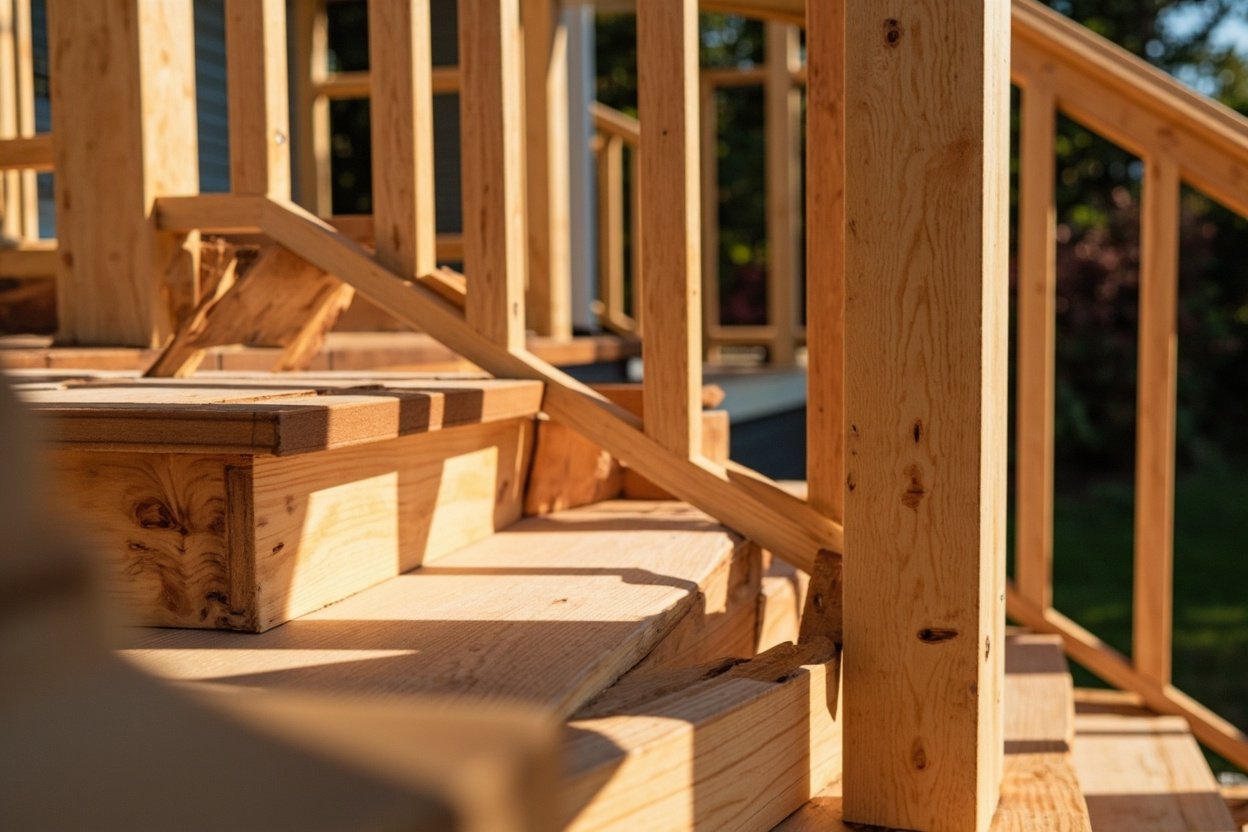
Structural Framing: The Foundation of Safe Deck Stairs
The strength of your deck stairs starts with the structural framing. Stringers — the diagonal supports that hold the treads — must be cut from pressure-treated lumber rated for ground contact if they are close to the soil. Each stringer needs to be properly spaced and secured to the deck framing with heavy-duty galvanized or stainless steel hardware. In older homes in Newton, Brookline, or Quincy, the existing deck frame may not have been designed to support a new stairwell, so an upfront inspection of the entire structure is important before any stairs are added.
Our team typically evaluates the load requirements, connection points, and overall condition of the existing framing during a free onsite estimate. If we find that the current structure cannot safely support new stairs, we will recommend a deck rebuild or targeted deck repairs to bring everything up to standard. This kind of thorough assessment protects you from costly problems down the road.
Material Choices for Long-Lasting Deck Stairs
Choosing the right deck materials for your stairs affects both appearance and longevity. Composite decking is a popular option because it resists moisture, does not splinter, and holds up well under Boston weather conditions without requiring regular sealing. Many homeowners in Wellesley, Weston, and Lexington prefer composite for its low maintenance characteristics, particularly on steps where bare feet and shoe traffic are most common.
That said, natural wood such as pressure-treated pine or cedar remains a solid and cost-effective choice, especially when it is properly sealed and maintained on a seasonal schedule. If you are building front porch construction as part of a larger project, the same material considerations apply to porch steps. The key is matching the material to the exposure level and your willingness to perform routine maintenance planning throughout the year.
Railing Safety and Code Compliance for Stairs
Deck stairs and their railings are subject to specific building code requirements, and these codes apply across all the towns we serve, from Wayland to Braintree and beyond. Handrails must be graspable, securely fastened, and at the correct height. Open-sided stairs generally require guards along the sides in addition to a continuous handrail on at least one wall or guard. These railing safety requirements are not optional — they are there to prevent injuries, especially for households with children or older adults.
Building permit requirements vary by municipality. Some towns in the Greater Boston area require a permit for stairs that exceed a certain rise or total height, while others only require one when the stairs are part of a larger deck project. Our team is familiar with the permitting process in Newton, Natick, Bedford, and many other surrounding towns, so we can help you understand what applies to your specific property and handle the paperwork when needed.
Maintenance Planning to Protect Your Investment
Once your deck stairs are built, a simple maintenance routine goes a long way. Keep the stairs clear of snow and ice, sweep off debris regularly, and inspect the railings and connections each spring and fall. If you have composite decking, cleaning with mild soap and water is usually sufficient. For wood stairs, applying a waterproof sealant every one to two years helps guard against the moisture damage that Boston winters can cause.
Regular inspections also give you a chance to catch small issues — a loose post, a cracked tread, or a rusted connector — before they become larger repair projects. If you ever notice movement in the stairs or the railing feels unstable, it is worth calling us right away to assess the structural framing before anyone uses them.
Working With a Team That Knows Your Area
From Lexington to Milton, Norwood to Burlington, the specific soil conditions, slope variations, and building codes in your town all play a role in how your deck stairs should be constructed. A contractor who understands the greater Boston landscape is better equipped to plan for factors like drainage, frost heave, and proximity to property lines. Advanced Deck & Porch has experience building and repairing decks and stairs throughout the region, and we bring that local knowledge to every project we take on.
Whether you are adding stairs to a newly constructed deck, replacing worn-out steps on an existing porch, or rebuilding a damaged structure after a harsh winter, we approach every job with the same focus on quality craftsmanship and honest communication.
Ready to discuss your project? Visit our deck and porch services page or call (857) 837-2100 to schedule a free onsite estimate.
Advanced Deck & Porch is a brand owned and operated by Sun Shore Construction. All estimates, contracts, and construction services are provided by Sun Shore Construction.