
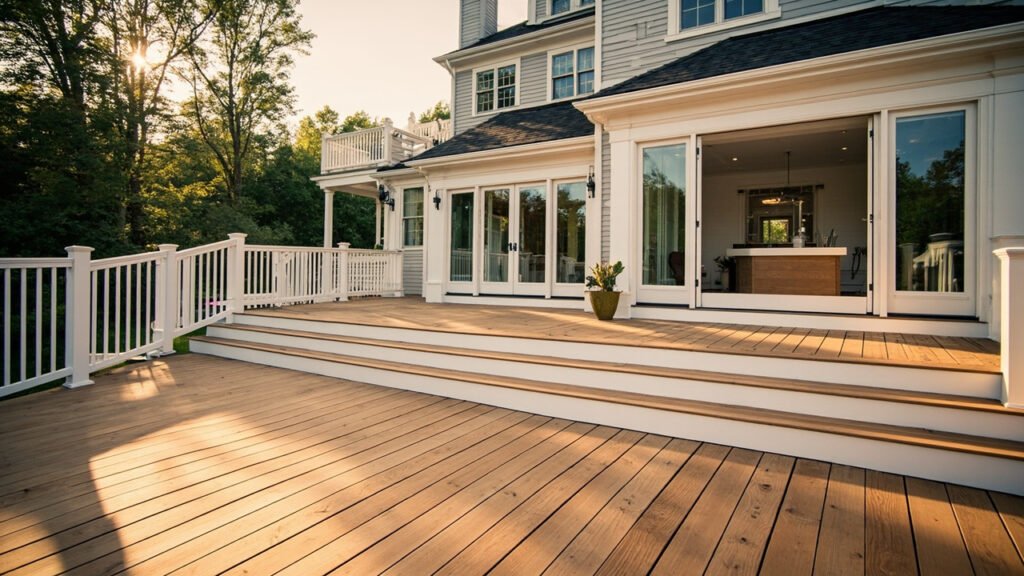
When you’re searching for a deck builder in Wellesley MA, the process can feel overwhelming. You want a finished structure that looks beautiful, functions well, and stands up to New England weather for years to come. Whether you’re building your first deck or replacing an aging structure, understanding what separates a quality installation from a problematic one will help you make the right choice for your home.
At Advanced Deck & Porch, we serve homeowners throughout Greater Boston, MetroWest, and surrounding communities including Newton, Brookline, Wellesley, Weston, and beyond. Our team brings careful attention to structural framing, material selection, and the details that make a deck both safe and enjoyable.
Below, we’ll walk you through the key considerations that matter when evaluating deck builders in the Wellesley MA area.
Weather Exposure and New England Climate Considerations
One of the most important factors for any deck project in our region is understanding how local weather impacts construction. Boston-area homeowners face freeze-thaw cycles, significant snowfall, and humidity fluctuations throughout the year. These conditions stress deck materials and structural components in ways that mild-climate builders never encounter.
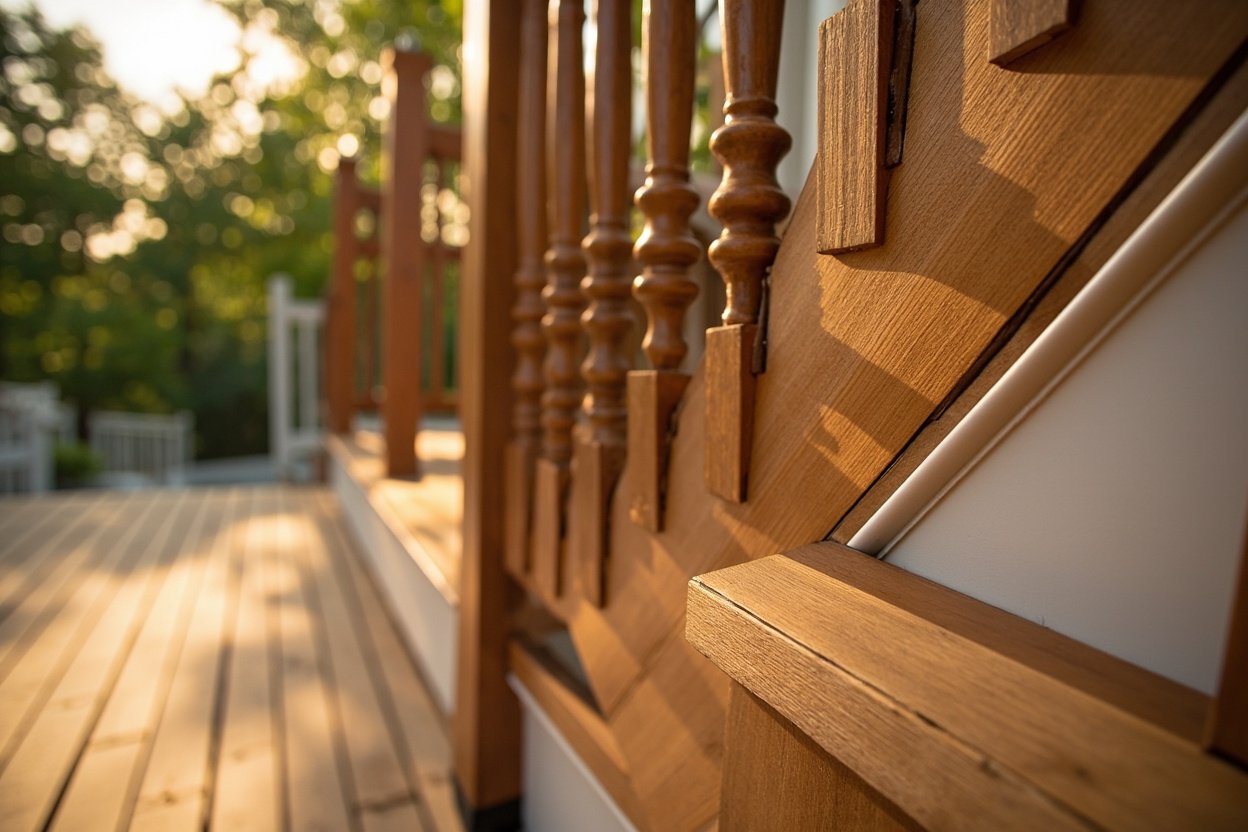
Proper structural framing must account for moisture management and proper drainage. Connections need to be secure, and flashing must be installed correctly to prevent water from reaching the ledger board where it attaches to your home. A deck built without these considerations may look fine initially but develop problems within just a few seasons. Composite decking has become increasingly popular because it resists moisture damage and maintains its appearance with far less maintenance than traditional wood. However, even the best materials require proper installation to perform as intended.
Material Selection: What Works Best for Boston-Area Decks
Today’s homeowners have more options than ever when selecting deck materials. The most common choices include:
- Pressure-treated lumber – solid choice for structural components, offering durability at a reasonable price point
- Composite decking – excellent resistance to moisture, insects, and UV exposure with minimal upkeep
- PVC and synthetic options – perform well in our climate with higher initial investment
- Natural hardwoods – cedar and redwood offer natural beauty with moderate maintenance requirements
The right choice depends on your budget, aesthetic preferences, and willingness to perform ongoing maintenance. Wood decks require regular staining and sealing to maintain their appearance and structural integrity. Composite and PVC options may cost more upfront but often save time and money over the life of the deck. Your deck builder should help you understand the pros and cons of each material in relation to your specific situation and how you plan to use the space.
Stairs, Railings, and Safety Requirements
Railing safety isn’t optional—it’s a legal requirement and a critical safety feature for any elevated deck. Building codes specify minimum railing heights, baluster spacing, and load requirements that protect your family and guests. In Massachusetts, local building departments enforce these codes, and permits are typically required for new deck construction.
Stairs deserve equal attention. Improperly built stairs are one of the most common sources of injury around residential decks. Tread depth, riser height, and handrail placement all fall under specific regulations. A quality deck builder will ensure your stairs meet code requirements while remaining comfortable to use. This attention to detail extends to the structural framing that supports your stairs and railings—weak or undersized components create safety hazards regardless of how the finished project looks.
Structural Framing and Long-Term Durability
The framing is the backbone of any deck, and it’s what you can’t see that often determines how long your deck will last. Proper joist sizing, beam placement, and connection hardware all contribute to a structurally sound deck that won’t sag, bounce, or shift over time. Ledger board installation requires particular care—the connection between your deck and house must be strong enough to resist lateral loads and prevent the deck from pulling away from the structure.
Post foundations need to extend below the frost line to prevent heaving during winter freeze-thaw cycles. In the Wellesley MA area, this typically means footings going down at least 48 inches, though local soil conditions can vary. A contractor who understands these requirements will build a deck that remains stable and level for decades.
Planning Your Deck Project: Permits and Timing
Before construction begins, most municipalities require building permits for new deck construction. The permit process ensures your project meets local codes and zoning requirements. Your deck builder should handle or guide you through this process, including any required inspections during construction.
Timing matters in our climate. The best construction window typically runs from late spring through early fall, although we can work around weather constraints in many cases. Planning ahead gives you the best chance of securing your preferred start date and allows time for the permit process to complete before work begins. This is especially important in towns like Wellesley, Newton, and Brookline where permit review times may vary depending on the season.
Maintenance Planning for Your New Deck
Once your deck is complete, regular maintenance keeps it looking and performing its best. Key maintenance tasks include:
- Annual cleaning to remove debris, pollen, and organic matter
- Inspecting railings and connections for any looseness or wear
- Checking for standing water or drainage issues near the foundation
- Re-staining wood decks every two to three years
- Trimming back vegetation that may retain moisture against the structure
For wood decks, this typically means annual cleaning and re-staining every couple of years. Composite decking requires less maintenance but benefits from periodic cleaning to remove dirt and debris. Your deck builder should provide specific maintenance recommendations based on the materials used in your project.
Why Local Experience Matters
Choosing a deck builder with extensive experience in the Wellesley MA area offers meaningful advantages. Local contractors understand regional soil conditions, building department procedures, and how New England weather affects deck construction. This knowledge translates into better decisions about framing, material selection, and finishing details.
We’ve worked with homeowners throughout Greater Boston and MetroWest, including Newton, Brookline, Weston, Westwood, Lexington, Needham, Natick, Wayland, Bedford, Burlington, Braintree, Quincy, Milton, Canton, and beyond. This local experience means we can anticipate challenges specific to our climate and deliver results that hold up year after year.
Building a deck is an investment in your home and your lifestyle. Taking time to understand what quality construction involves helps you evaluate potential contractors and make informed decisions about your project. Whether you’re envisioning a simple platform deck or an elaborate outdoor living space with multiple levels and built-in features, the principles remain the same: proper structural framing, quality materials, attention to safety requirements, and craftsmanship that lasts.
Ready to discuss your project? Visit our deck and porch services page or call (857) 837-2100 to schedule a free onsite estimate.
Advanced Deck & Porch is a brand owned and operated by Sun Shore Construction. All estimates, contracts, and construction services are provided by Sun Shore Construction.