
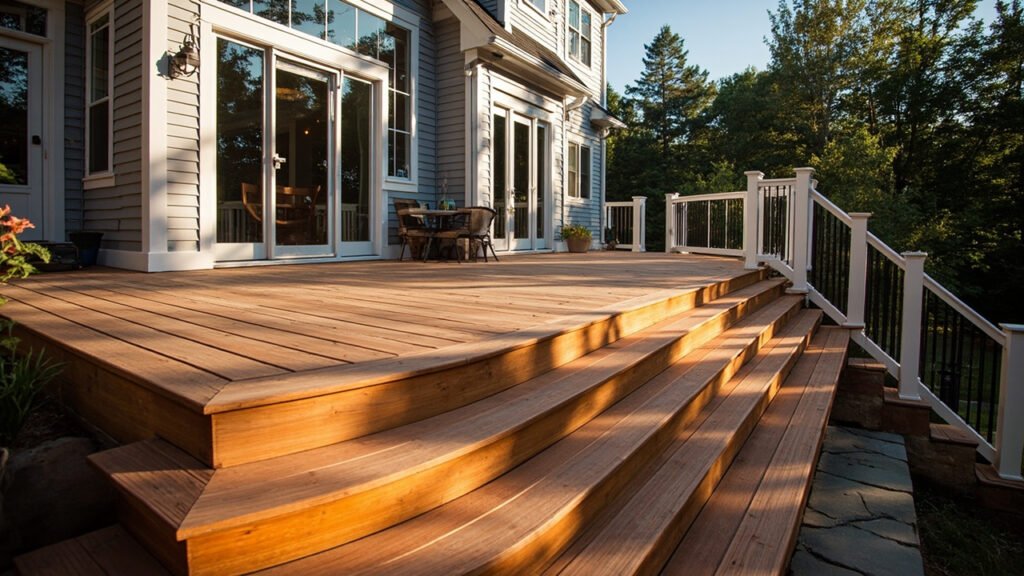
Building a deck in the Boston area involves more than choosing where to place your grill and seating area. The New England climate, local building codes, and soil conditions throughout Greater Boston create unique considerations that can affect both the short-term construction process and the long-term performance of your outdoor space. If you are planning deck construction in Boston or any of the surrounding communities like Newton, Brookline, Wellesley, or Wayland, understanding these factors helps you make informed decisions before the first board is laid.
Why Boston Weather Matters for Your Deck Project
New England experiences dramatic seasonal shifts that directly impact deck materials and structural planning. From humid summers to freezing winters with significant snowfall, your deck must be built to withstand freeze-thaw cycles, moisture exposure, and temperature fluctuations that can stress even well-constructed structures. This weather exposure means that proper flashing, drainage planning, and material selection become especially critical for decks in the Boston metro area.
Most deck failures in our region occur not from poor design but from inadequate protection against moisture infiltration. When ice and snow sit on a deck through winter, then rapid warming occurs, the cycle can compromise wood that is not properly sealed and flashed. This is why we emphasize quality structural framing and appropriate material choices that account for our specific climate challenges.
Choosing the Right Deck Materials for New England
Modern homeowners have access to decking options that perform far better than the traditional pressure-treated lumber that dominated decks for decades. Composite decking has become increasingly popular in Boston-area projects because it resists moisture absorption, does not require annual sealing, and maintains its appearance despite exposure to sun and snow. While the upfront investment is higher, many homeowners find that the reduced maintenance requirements and longer lifespan justify the cost over time.
However, not all composite materials are created equal. We work with reputable manufacturers and help clients understand the differences in warranty coverage, fade resistance, and structural capacity. For homeowners who prefer the look of natural wood, we recommend specific pressure-treated hardwoods that hold up better to our climate than standard treated pine. The key is matching the material to your priorities around appearance, maintenance, and budget.
For deck railings, safety considerations should drive your material choice. Aluminum and vinyl railings offer excellent durability with minimal maintenance, while traditional wood railings require regular upkeep to remain structurally sound and safe. All railing installations must meet specific height and spacing requirements that are defined in the Massachusetts State Building Code.
Structural Framing and the Foundation of a Safe Deck
The part of your deck that you will never see but that matters most is the structural framing. Proper deck construction in Boston requires attention to load calculations, post installation, and connection details that ensure your deck can safely support furniture, gatherings, and the weight of snow accumulation. The frost line in Massachusetts typically runs 36 to 48 inches deep, which means that footings must extend below this point to prevent heaving during winter freeze-thaw cycles.
In communities like Wellesley, Weston, and Lexington where homes often sit on ledge or dense clay, specialized foundation approaches may be required. We assess each site individually because conditions can vary significantly even within the same neighborhood. This attention to site-specific conditions helps prevent the settling and structural movement that leads to bouncy decks, sticking doors, and railings that shift over time.
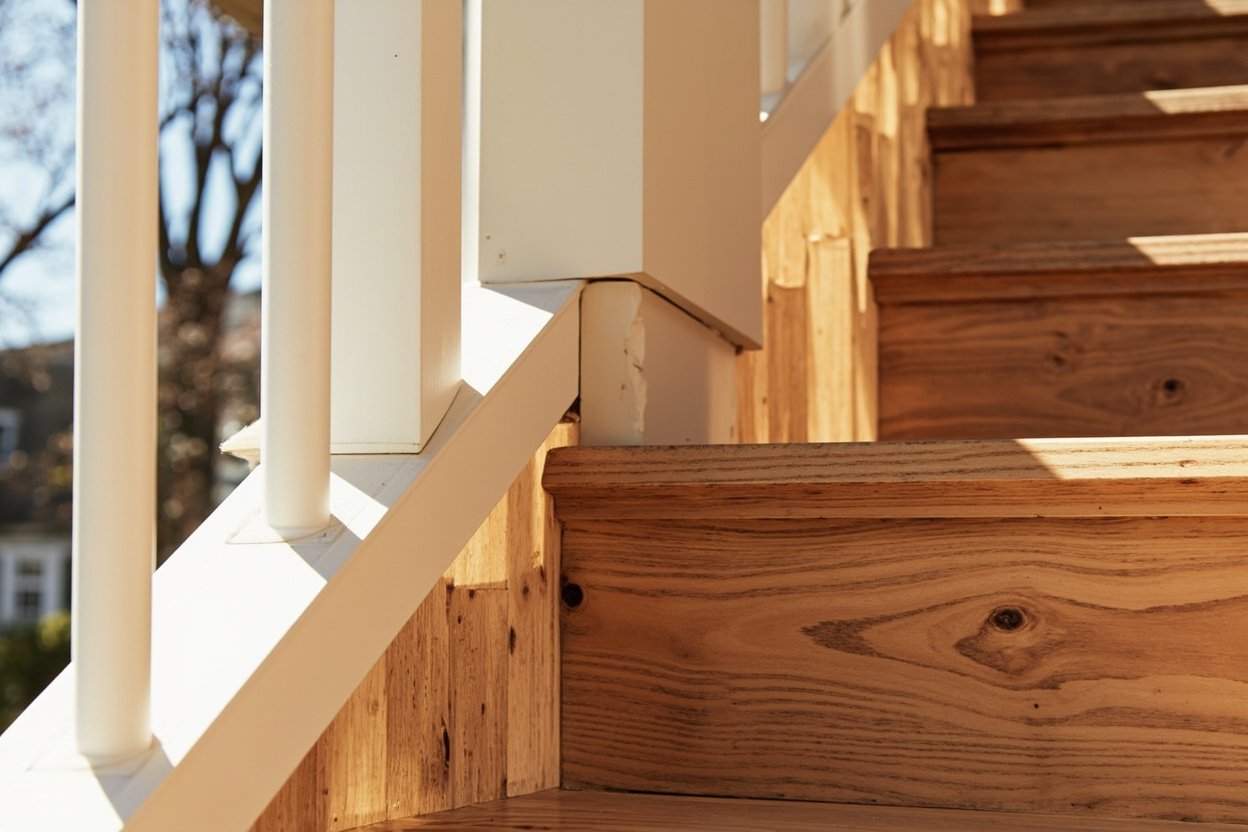
Stairs deserve particular attention because they represent both a functional necessity and a safety priority. Proper stair construction includes consistent rise and run dimensions, secure stringer attachment, and handrails that meet code requirements. Many deck failures at stairs occur because builders skimp on stringer support or use inadequate hardware. We install stairs that function safely for decades rather than developing squeaks and weak points within a few seasons.
Navigating Permits and Community Requirements
Building a deck in Boston, Newton, Quincy, or any of the surrounding communities requires proper permits and compliance with local building codes. The permitting process exists to ensure that structures meet minimum safety standards and that projects do not negatively impact neighboring properties. Most municipalities in the Greater Boston area require permits for decks exceeding certain height thresholds or that cover specific square footage, and some communities have additional regulations for properties in historic districts or near wetlands.
The permit application process typically requires scaled drawings showing the proposed deck layout, structural details for framing and footings, and sometimes a site plan demonstrating property line setbacks. While this paperwork may seem like an obstacle, it actually protects you as a homeowner by ensuring that the design meets current codes and that the construction will be inspected by a qualified building official at key stages.
HOA restrictions can also affect deck projects in communities like Wellesley, Brookline, and Wayland. We are familiar with the approval processes in these communities and can help you navigate any architectural review requirements before construction begins. This proactive approach prevents the frustration and expense of building a deck that must later be modified to comply with community standards.
Planning Your Deck Project Timeline
Most homeowners are surprised to learn that deck construction in the Boston area is best scheduled during late winter or early spring for several reasons. Contractor schedules tend to be more flexible during these months, permitting offices often process applications more quickly when caseloads are lighter, and your new deck will be ready for use just as warmer weather arrives. However, we understand that life circumstances sometimes require construction during peak season, and we work with clients to set realistic expectations for timeline and availability.
Maintenance planning should begin before your deck is even completed. Understanding the care requirements of your chosen materials—whether that means periodic cleaning for composite decking or annual sealing for wood—helps you protect your investment from the first season forward.
Ready to discuss your project? Visit our deck and porch services page or call (857) 837-2100 to schedule a free onsite estimate.
Advanced Deck & Porch is a brand owned and operated by Sun Shore Construction. All estimates, contracts, and construction services are provided by Sun Shore Construction.