
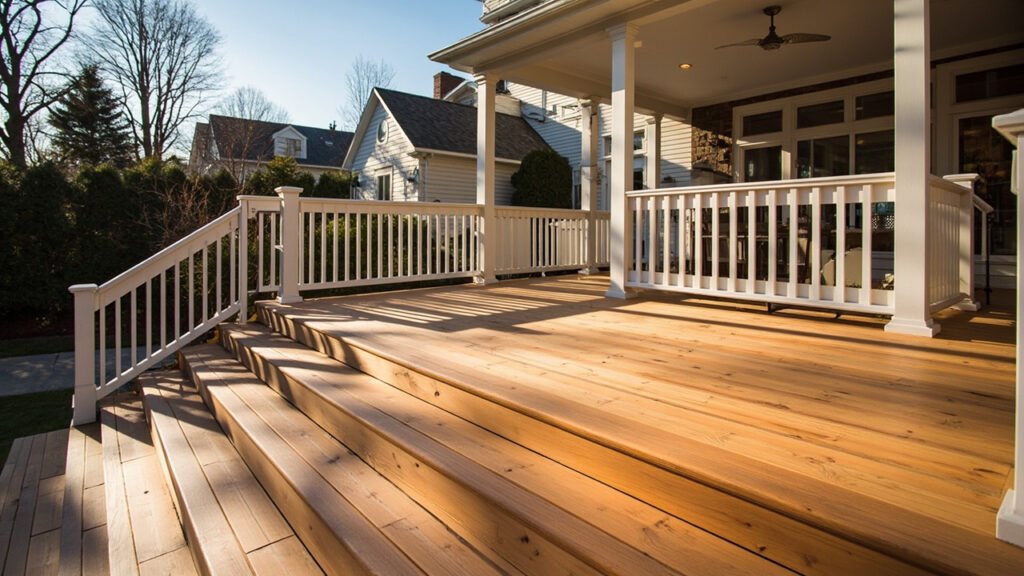
Adding or replacing deck stairs in the Boston area comes with unique challenges that go beyond simple construction. From harsh winters to local building codes, there is a lot to consider before you start your project. Whether you are building a new deck or upgrading aging stairs, understanding the key factors will help you make informed decisions and avoid costly mistakes down the road.
Understanding Boston-Area Building Codes for Deck Stairs
Boston and its surrounding communities have specific requirements for deck stairs that homeowners must follow. Most municipalities in Greater Boston enforce the International Residential Code with local amendments, which means your stairs need to meet certain standards for rise, run, and width. The maximum rise per step is typically 7.75 inches, while the minimum run is 10 inches. Stairs must also be at least 36 inches wide, and landings are required at the top and bottom.
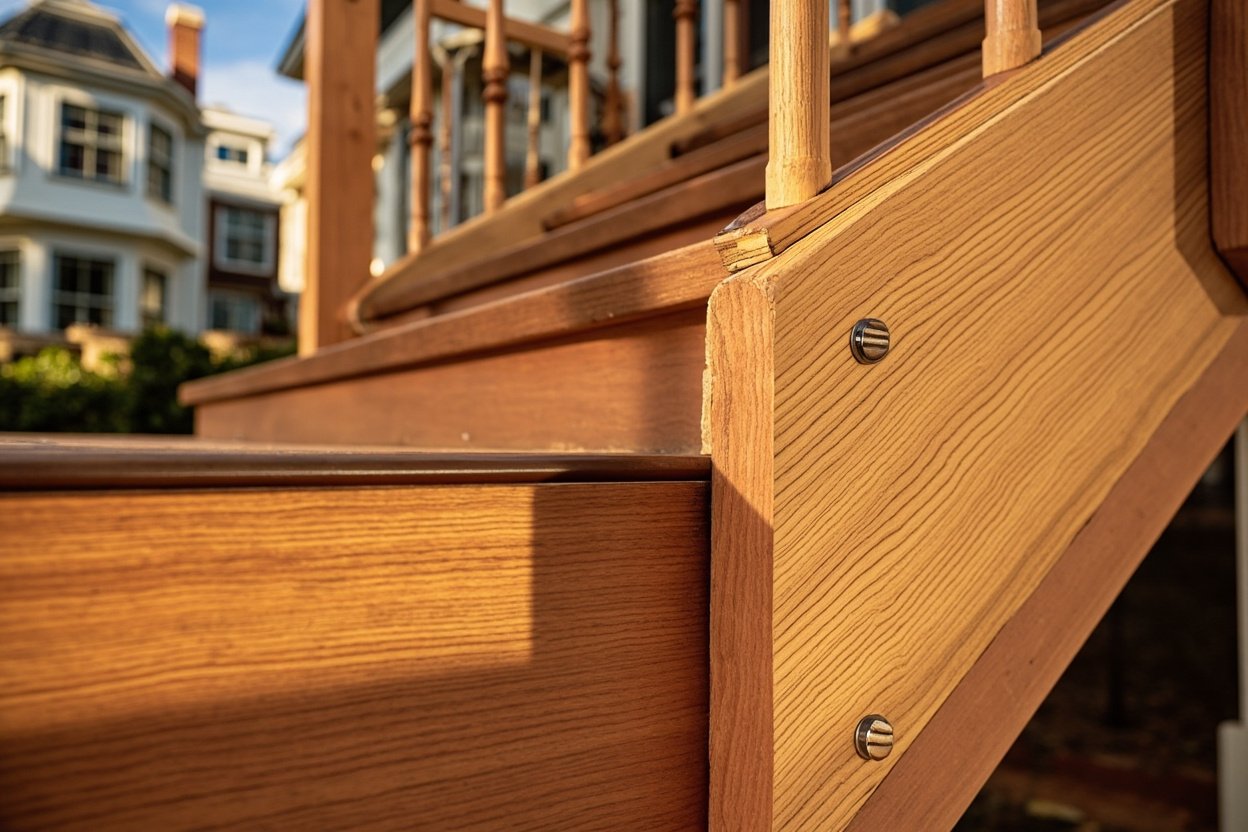
If your home is in a historic district in Boston, Newton, or Brookline, you may face additional review processes. Permits are generally required for deck stair construction, and your local building department will want to see detailed plans before approving the work. Working with a contractor who understands these local requirements can save you time and ensure your project meets all necessary standards.
Weather Exposure: Designing Stairs That Survive Boston Winters
Boston winters are tough on outdoor structures. Freeze-thaw cycles, heavy snow, ice, and road salt can wreak havoc on deck stairs that are not built with weather resistance in mind. Proper structural framing is essential to prevent moisture from seeping into joints and causing rot or deterioration over time.
When selecting deck materials for your stairs, consider options that handle moisture well. Composite decking is a popular choice because it resists warping, splintering, and moisture damage without requiring annual sealing. If you prefer natural wood, cedar and pressure-treated lumber are better suited for Boston weather, though they will need regular maintenance to stay in good condition.
Proper drainage planning is also important. Stairs should be built with a slight slope to allow water to run off rather than pool on the surfaces. Gaps between treads should be wide enough to let melting snow and rain pass through easily. These small details make a big difference in how well your stairs hold up over many seasons.
Choosing the Right Materials for Your Deck Stairs
Material selection affects both the look and longevity of your deck stairs. Here are the most common options used in the Boston area:
- Composite decking offers low maintenance and excellent durability. It comes in a variety of colors and textures that mimic natural wood while resisting fading and staining.
- Cedar and redwood provide natural beauty and good resistance to decay, though they require periodic sealing to maintain their appearance.
- Pressure-treated lumber is the most affordable option and holds up well against insects and moisture. It can develop cracks and splinters over time but remains a solid choice for budget-conscious projects.
- Aluminum is lightweight, rust-resistant, and works well for modern designs. It is often used for railings and trim details.
Each material has its own maintenance requirements, so think about how much upkeep you are willing to do before making your selection. Your contractor can help you weigh the pros and cons based on your specific situation and budget.
Railing Safety and Accessibility Considerations
Deck stairs need secure railings that meet code requirements and provide safe grip for users of all ages. In Massachusetts, railings are required on any set of stairs with four or more risers. The railing height should be between 34 and 38 inches measured from the nosing of the tread.
For households with young children or elderly family members, additional safety features may be worth considering. Balusters should be spaced no more than 4 inches apart to prevent small children from getting stuck. Handrails should be continuous along the entire length of the stairs and should be easy to grip comfortably.
Accessibility matters for many Boston homeowners, especially those living in Newton, Wellesley, or Weston where multigenerational households are common. Ensuring your stairs are safe and easy to use for everyone is an investment in your home that pays off in both comfort and peace of mind.
Maintenance Planning for Long-Term Performance
Once your new deck stairs are built, a simple maintenance routine will help them last for years. Inspect your stairs each spring after the snow melts to check for loose boards, damaged railings, or signs of rot. Look closely at the structural framing where it meets the deck and the ground, as these connection points are most vulnerable to moisture damage.
Cleaning your stairs regularly prevents the buildup of mold, mildew, and debris that can make surfaces slippery and cause deterioration. For wood stairs, applying a fresh coat of sealant every one to two years keeps moisture out and maintains the appearance. Composite decking typically only needs occasional washing with soap and water.
Do not ignore small problems. A loose board or wobbly railing is easier and less expensive to fix right away than it will be after the damage spreads. Making maintenance a habit protects your investment and keeps your outdoor space safe for family and guests.
Why Professional Installation Matters for Deck Stairs
While it might be tempting to tackle deck stairs as a DIY project, there are significant advantages to hiring an experienced contractor. Proper structural framing requires knowledge of load calculations, connection methods, and building codes that are not always obvious from online tutorials. A professional ensures your stairs are anchored securely to the deck and the ground, reducing the risk of collapse or injury.
Contractors also have access to better materials at better prices and can complete the work much faster than most homeowners. They handle the permit process, coordinate inspections, and stand behind their work if issues arise later. For homeowners in Boston, Greater Boston, and MetroWest, working with a local contractor means getting service from someone who understands the specific challenges of building in this region.
Ready to discuss your project? Visit our deck and porch services page or call (857) 837-2100 to schedule a free onsite estimate.
Building or replacing deck stairs is a worthwhile home improvement that enhances both the function and value of your property. By planning carefully, choosing the right materials, and working with professionals who know the Boston area, you can create outdoor stairs that are safe, durable, and built to handle whatever the New England weather brings.
Advanced Deck & Porch is a brand owned and operated by Sun Shore Construction. All estimates, contracts, and construction services are provided by Sun Shore Construction.