
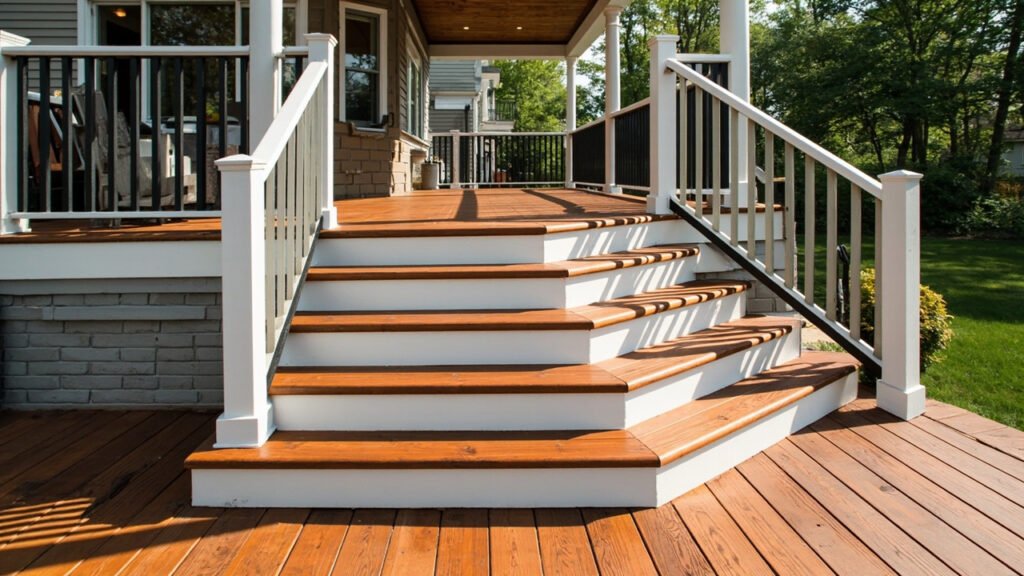
Building or replacing deck stairs in the Boston area comes with unique challenges that homeowners in Newton, Brookline, Wellesley, and surrounding communities understand well. New England weather puts extra demands on outdoor structures, and proper planning from the start saves money and headaches down the road. This guide walks through what you need to know when adding or upgrading deck stairs for your Greater Boston home.
Understanding Boston’s Deck Stair Requirements
Boston and its surrounding towns have specific building codes that govern deck stair construction. These codes exist primarily for safety, ensuring that stairs can handle the wear from daily use and New England’s freeze-thaw cycles. Before starting any deck stair project, you need to understand the requirements for your specific town, whether you are in Lexington, Quincy, or Natick. Most municipalities require permits for deck stairs exceeding a certain height, and inspections are typically needed once the structural framing is complete.
The good news is that these requirements actually work in your favor. Properly permitted and inspected deck stairs add real value to your home while keeping your family safe. A professional deck contractor familiar with MetroWest building departments can navigate the permit process smoothly and ensure all code requirements are met from the foundation to the finishing touches.
Structural Framing for Durable Deck Stairs
The structural framing forms the backbone of any deck stair system. Even the most beautiful stairs will fail quickly if the underlying structure is weak or improperly installed. In Boston’s climate, where soil conditions vary from the rocky terrain of Weston to the softer ground in Braintree, proper footings are essential.
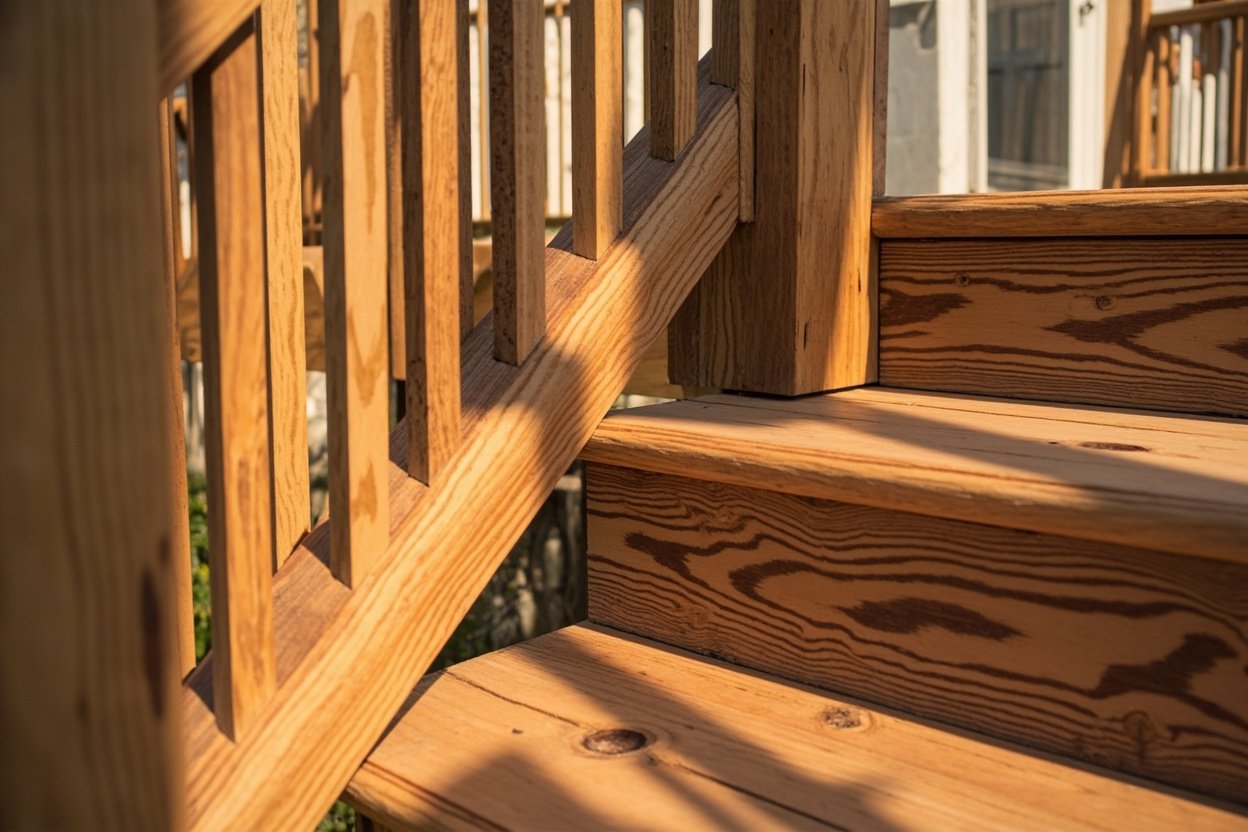
Strong deck stairs require solid stringers—the diagonal supports that hold the treads and risers. Most contractors recommend using notched southern yellow pine or engineered wood products rated for outdoor use. The framing must be properly attached to the deck frame using metal connectors rather than just nails or screws. For wider stairs or stairs carrying heavy foot traffic, adding mid-span support or using larger dimensional lumber ensures the structure stays solid for decades.
Proper joist hangers, galvanized hardware, and adequate flashing around connection points protect against moisture infiltration that could compromise the frame over time. When planning deck stairs, think about how water drains away from the connection points and whether snow and ice accumulation could add excessive load during winter months.
Choosing the Right Deck Materials for Stairs
Material selection significantly impacts how your deck stairs age and how much maintenance they require. Traditional wood decking remains popular for its natural appearance, but modern Composite decking offers compelling advantages for Boston homeowners. Composite materials resist moisture absorption, which means they do not warp, split, or rot as quickly as traditional wood when exposed to our humid summers and snowy winters.
Composite decking also maintains its appearance with minimal upkeep. No annual staining or sealing means less time on a ladder and more time enjoying your outdoor space. Many Composite products now come with textured surfaces that provide excellent slip resistance, an important safety consideration for Boston’s icy winters and autumn leaf buildup.
For homeowners who prefer wood, pressure-treated lumber remains the standard choice for structural components, while cedar or redwood offer natural resistance to decay for visible surfaces. Either way, choosing materials rated for ground contact and outdoor exposure ensures your stairs handle New England conditions year after year.
Railing Safety and Code Compliance
Deck railings go hand in hand with stairs when it comes to safety requirements. Boston-area building codes specify minimum railing height, maximum baluster spacing, and load requirements that the railing system must meet. These regulations exist because falls from elevated decks cause serious injuries, and proper railings prevent accidents.
Railing options include traditional wood balusters, aluminum systems, glass panels, and Composite railing systems that match Composite decking. Each option has different maintenance needs and aesthetic characteristics. Aluminum and glass railings offer unobstructed views and require minimal upkeep, while wood railings provide a classic look that many homeowners prefer for historic homes in Brookline and Wellesley.
Regardless of material choice, ensure the railing posts are lagged or bolted directly to the structural framing with adequate blocking. Railings that wiggle or feel unstable indicate installation problems that need correction before they become safety hazards.
Weather Exposure and Seasonal Planning for Boston Homes
Living in the Greater Boston area means your deck stairs face everything from summer humidity to winter ice and snow. Strategic planning accounts for these conditions from the start. South-facing stairs in Wayland or east-facing stairs in Milton receive different sun exposure, affecting how quickly surfaces dry after rain. This impacts both safety and material longevity.
Snow accumulation on deck stairs creates slip hazards and adds significant weight to the structure. Proper drainage planning prevents water from pooling on treads or freezing in gaps between boards. Some homeowners choose heated stair systems or traction strips for high-traffic areas, particularly for primary entry stairs that see daily use.
Fall maintenance planning helps your deck stairs survive winter in good condition. Clearing snow promptly, avoiding de-icing salts that can damage wood or composite surfaces, and ensuring proper drainage before the first freeze all contribute to long-term durability.
Maintenance Tips for Long-Lasting Deck Stairs
Regular maintenance extends the life of your deck stairs regardless of materials. Annual inspections catch small problems before they become expensive repairs. Check for loose fasteners, signs of rot in wood components, and any movement in the structure that might indicate settling or connection failure.
Keep the stairs clean by regularly sweeping debris and washing surfaces to prevent mold and mildew buildup. For wood stairs, plan for periodic staining or sealing every two to three years depending on sun exposure and wear patterns. Composite decking typically requires only periodic washing with mild soap and water.
Inspect metal hardware annually for signs of corrosion, particularly after winter months when de-icing salts are most likely to cause oxidation. Replacing worn treads or damaged balusters promptly prevents further deterioration and maintains safety standards.
Getting Started on Your Boston Deck Stair Project
Whether you need new deck stairs for a freshly constructed deck or want to replace aging stairs on an existing structure, careful planning leads to better results. Understanding local codes, choosing quality materials suited for New England conditions, and working with experienced contractors familiar with Greater Boston building requirements sets your project up for success.
Advanced Deck & Porch has served homeowners throughout Boston, Newton, Brookline, Wellesley, and the surrounding MetroWest communities for years, bringing expertise in deck construction, repairs, and stair systems that handle local weather demands.
Ready to discuss your project? Visit our deck and porch services page or call (857) 837-2100 to schedule a free onsite estimate.
Advanced Deck & Porch is a brand owned and operated by Sun Shore Construction. All estimates, contracts, and construction services are provided by Sun Shore Construction.